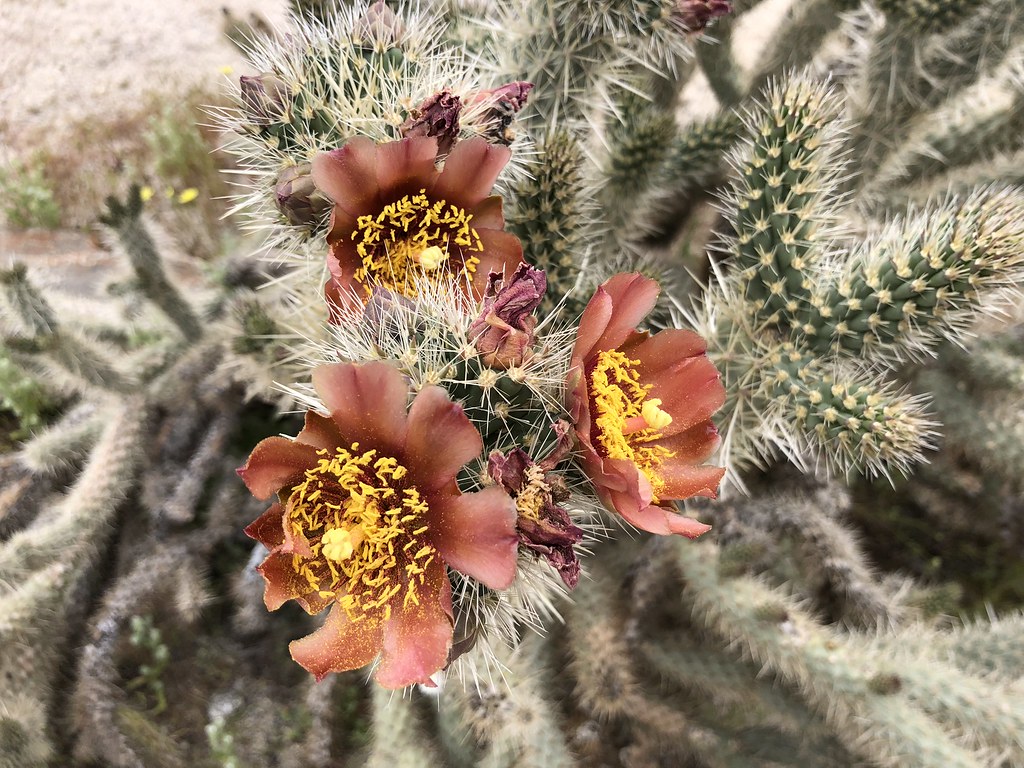
I’ve been posting about the amazing desert sunflowers and dandelions we saw on our wildflowerpalooza trip to Anza-Borrego Desert State Park back in March 2019, but being a desert and all you may have wondered if we were just going to ignore our stabby friends the cacti. We could never do that. These first pics are all from the main visitor center just outside of Borrego Springs. Matti painstakingly labeled them on flickr (something I usually do, or used to do) and I figured out a bunch of his ID’s were wrong as I was putting this together and proceeded to get mad at him for spreading cactus misinformation online. This blog may make you think I’m some sort of walking encyclopedia of plant names, but I rely heavily on the internet to go back and figure things out. I think I straightened out the names, but feel free to let me know if they’re not. Love the orangey-red flower of this first cholla!
Teddy Bear Cholla, Cylindropuntia bigelovii v. bigelovii
Here we have the polyamorous cholla, Cylindropuntia bigelovii . I’m joking and never watched Big Love since we don’t have HBO (I’d probably love it). I HAVE watched lots of Sister Wives, but recently got rid of my ability to watch Bravo and TLC shows, so I can’t watch that crap anymore. If I could I would. In all fairness I’ll probably binge watch them all this winter in Wisconsin. I AM really missing Top Chef as it is not crap (love you Padma), and I’m afraid I’m going to miss out on potential new Backyard Envy episodes. Love those folks, too.
Beavertail Cactus, Opuntia basilaris v. basilaris
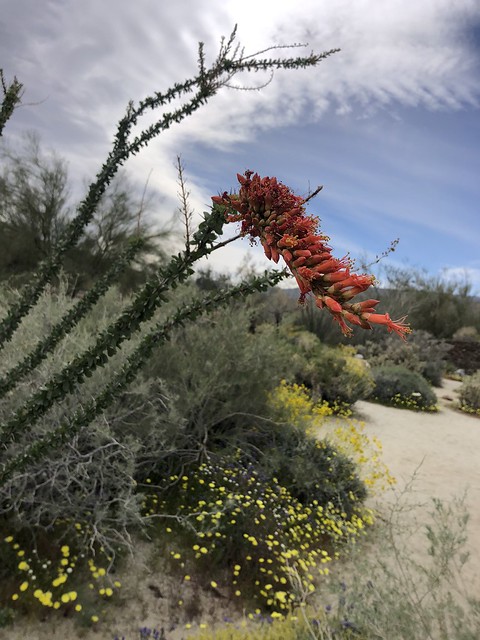
Ocotillo, Fouquieria splendens ssp splendens
I had no idea what this crazy not-a-cactus thing we saw blooming all over the place was. It made me feel lame since it’s so cool, but it was easy to find online. When not all green and flowery these guys look like a bunch of dead, thorny sticks. Octotillo is Spanish for “little torch” which makes sense. Apparently one of their uses is as a “living fence” which is pretty much any of the plants pictured on this page. I used to joke that was going to start a security garden company that strategically plants Agaves and other pokey plants to keep people and maybe even fire out in an attractive manner.
Diamond or Pencil Cholla, Cylindropuntia ramosissima
Remember how I mentioned Matti misnaming cacti? He had this cool guy above named the same as the very first picture. Neither were correct, but I’m not bitter about it or anything. Diamond cholla would most definitely make a great security fence option as the spines on it look like they could take out an eye, plus it’s lovely flowers will attract bees and butterflies.
Zoe with a California Barrel Cactus on Cactus Loop Trail, Ferocactus cylindraceus
When I think of barrel cactus I think of the masses of them at Huntington Gardens or the Getty, but these barrels are different and can grow up to ten feet tall. This pic and the next ones were taken just north of the Tamarisk Campground on the Cactus Loop Trail. It’s a short little hike filled with tons of cacti and desert poppies that’s not too far from Borrego Springs.
Bigelow’s Monkeyflower, Mimulus bigelovii
The Cactus Loop Trail was not all cacti and pokey plants. I was excited to see this desert Mimulus that appears to also have a lot of love based on it’s Latin name.
Way back in 2009 I must have read somewhere on the interwebs that you could propagate a pineapple using a pineapple from the grocery store. There’s the weird picture montage I made about it years ago. Last summer while trapped in the house I started a pineapple again since we were going through them like crazy, but I have no pictures. Anyways, I let the poor thing fry out and die, which is why I’ve included this excellent TikTok guide to propagating pineapples in water by Garden Marcus. I love TikTok. I could watch videos of people getting excited about cooking, gardening, painting and making cool things all day.
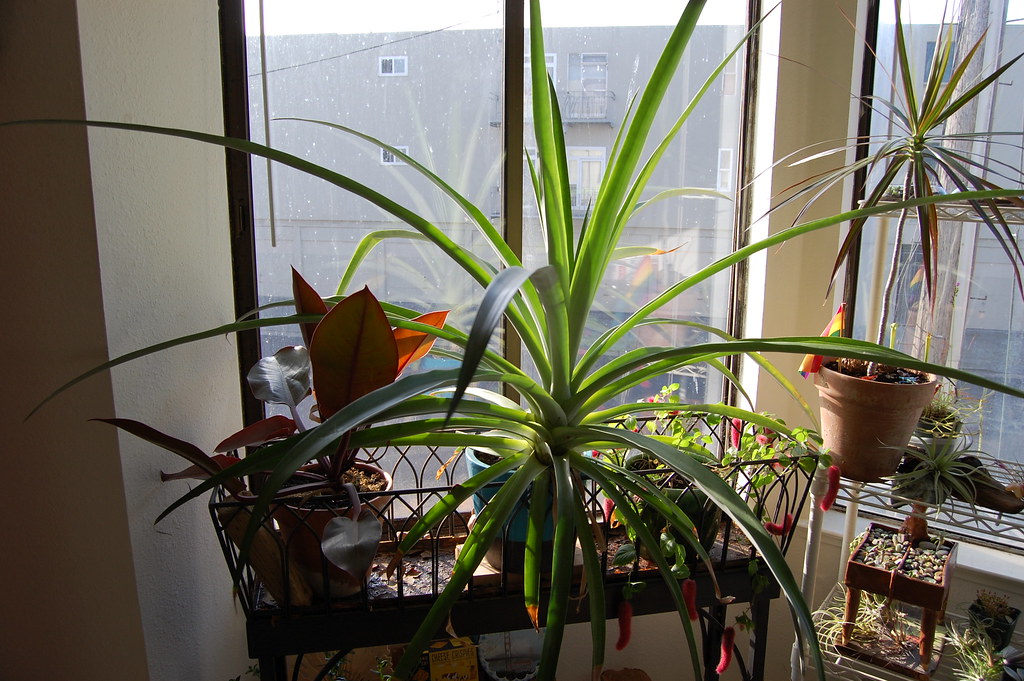
As you can see our baby grew up and got huge living in this sunny west facing window. I can’t say the same for that poor chenile plant that was murdered by lack of water shortly after this picture was taken. I don’t even remember owning that Philadendron ‘Congo’ on the left. It’s weird looking back at these old pictures.
Sadly there is no video of me getting poked every time I put this guy in the kitchen sink to get watered. There is also no video of me watering it one day, only to have 1000’s of ants start pouring out of it while trying to save their precious eggs. I started screaming obscenities as I always do when this happens, which was frequently when you live on a giant Argentine ant mega-colony that gets cranky when it rains in the winter and decides to invade innocent houseplants, even Tillandsia. When it happens to smaller potted plants we soak the crap out of them, make them sit outside for a day and then hose off all the little ant corpses. This was just too disgusting, so the pineapple was brought to live outside forever which turned out to only be about a week or so. It wasn’t that cold, but I’m guessing the shock of being abandoned to the outdoors by the very people who convinced it to grow again was just too much for it to take.
I apologize for my potty mouth post, but folks who have met me in real life know I swear a lot, including the F word. Unfortunately, producing a child did not help me clean up my foul trucker mouth. Way back in the super old days I did some whack shit in the garden that I am not proud of, but now it’s kind of hilarious. I thought it would be fun to share some of the weird stuff I did. It’s not like people emerge from the womb with green thumbs.
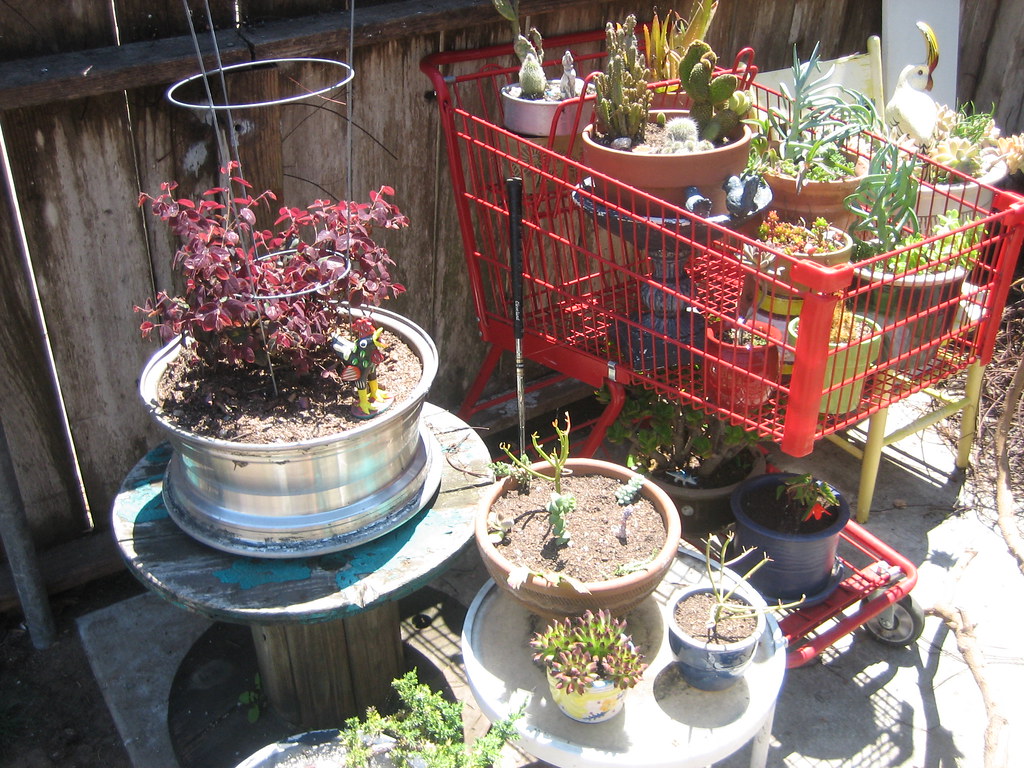
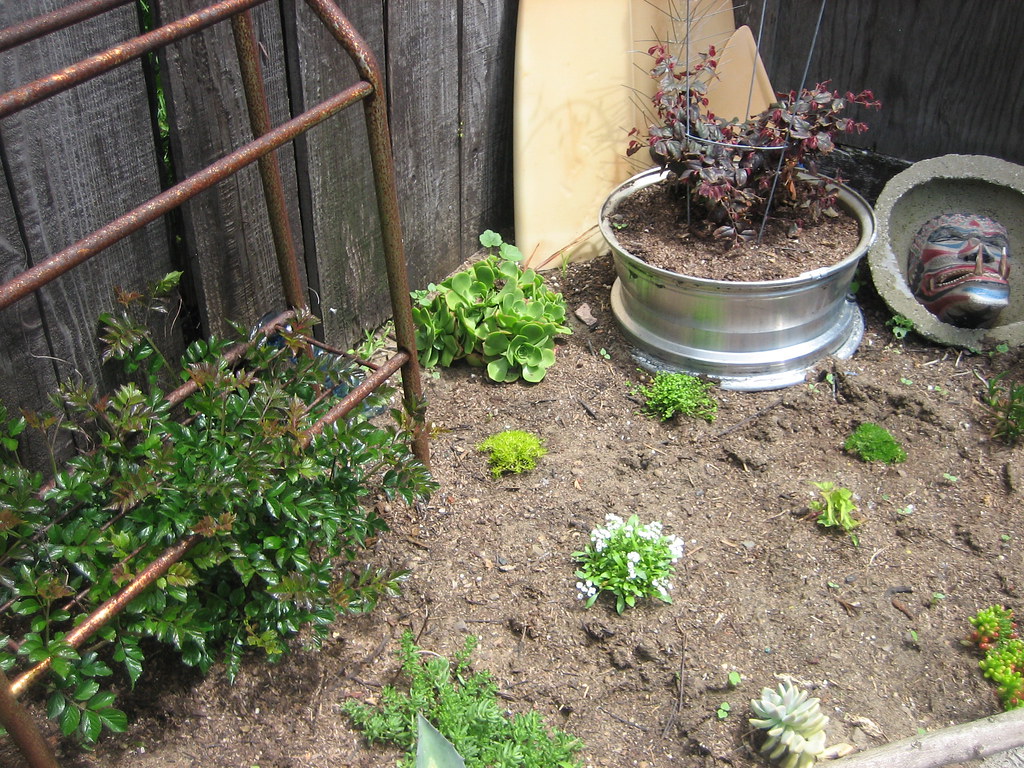
Yep, that’s right. That’s a puny little tomato cage in the tire rim on a table with a Loropetalum chinense. Why? No reason, I just thought maybe it would be needed and we had it, so I jammed it in. I’ll use the excuse that this was before I had an iphone and could look everything up at any moment, including “is it necessary to cage this shrub?”
The other f*ck up here is planting a shrub that can grow up to six feet tall in a tiny little tire rim with not a whole lot to keep the dirt from washing out the bottom. Reading the plant tags can be helpful, but I often ignored them. I’m not even going to talk about the shopping cart. It gets worse…
May 29, 2009
There’s a lot of terrible things going on here. So this pic was taken before the first one. Instead of planting the poor Lorapetalum in the ground I set it over on a table with the same tomato cage. That poor baby cape honeysuckle is being imprisoned by an old towel rack. It eventually grew through it and was a mess to chop down and remove. I should have known it could grow 15-20 feet tall, but again didn’t look at the tag. Hell, I thought it was a real honeysuckle, like the kind that smell good. It’s not. Can you tell I shopped for plants at Home Depot back then? Don’t even get me started on the scotch moss and baby tears you can see (those were Matti’s choices). There’s a whole f*ck up post dedicated to baby tears in the future, the other two died.
April 5, 2009
Check out that classy umbrella! Our upstairs neighbor Jim installed that to keep his remote thermometer from heating up in the sun. We eventually moved it to a shady spot, with his permission of course and took down the umbrella. I will say, that when we moved in our other neighbors had filled the backyard with junk. There was even a nasty couch back there. Keep in mind this was a rat playground. Our Outer Sunset SF garden had twice as many rats as the Bayview one. They used to fight in the trees which was always nice when people were over. Them, “What are those weird noises coming out of the tree?” Us, “Oh it’s just the rats, they don’t all like each other.” As soon as the junky neighbors moved out, we threw out tons of crap and started our budget rental garden transformation. Hopefully this helps you feel a little better about some weird/embarrassing thing you did with your garden. I have many more of these to share.
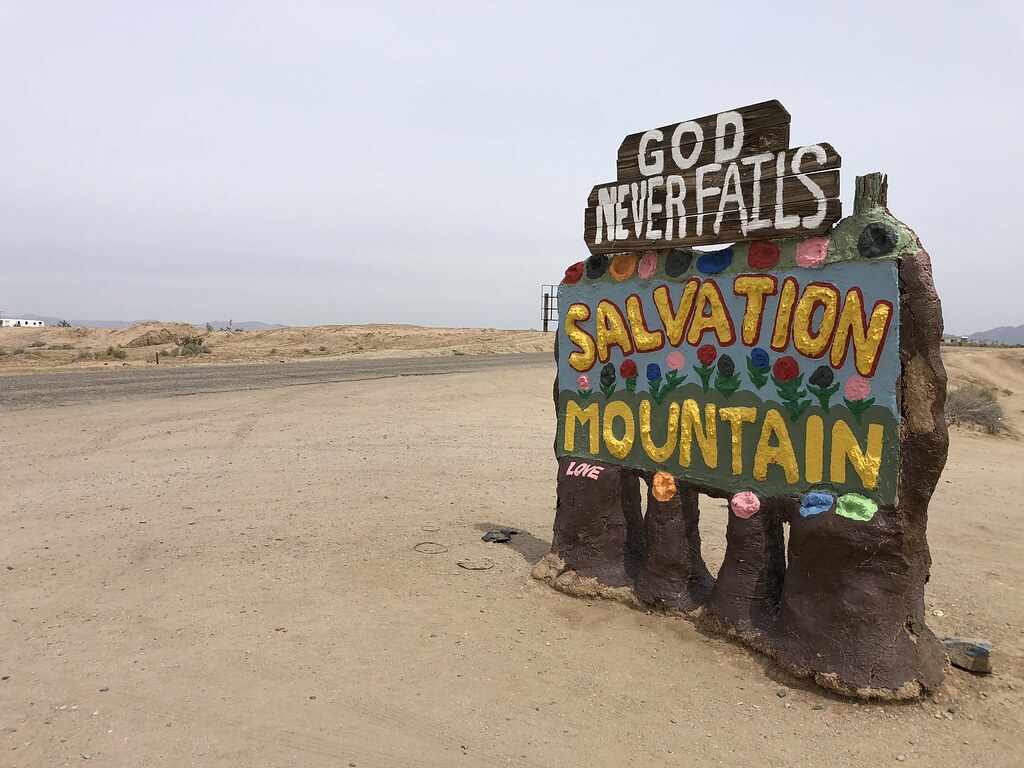
Sometimes we take a break from plants and go visit other cool places. Matti and I both love roadside attractions and Salvation Mountain was one we’d been wanting to see for awhile. We watched a documentary on PBS called Plagues & Pleasures on the Salton Sea (it’s narrated by John Waters and so good) when it came out in 2014 and it immediately became a bucket list place. This was the most exciting stop on our drive around the Salton Sea, which is what happens when humans do really, really, really stupid things to nature. Just watch the documentary, it’s fascinating and horrifying all at the same time.
Where’s Matti?
Can you find Matti on the mountain? We were blown away at how big it actually was in real life and how scary it was to walk up to the top it along the yellow “brick” road. There are no hand rails. Max was too decrepit for the climb, so we took turns hanging out with him at the base. Apparently you can camp for free as long as you as you stay off the mountain according to their website.
Bible Car
Salvation Mountain is a literal man-made mountain 28 years in the making, covered in half a million gallons of latex paint. What started as a small monument made of dirt and painted cement became, over time, a sprawling adobe and hay-bale mountain complex, with peripheral structures made of telephone poles, tires, and car windows, as well as art cars and sculptures, all painted in a patchwork of stripes and color blocks of whatever paint was donated that week.
The creator of Salvation Mountain, Leonard Knight initially tried to spread his love of God via a giant hot-air balloon, but after it failed several times he built a mountain instead. That’s the cliff notes version, there’s tons of great info about him on their website and a wonderful video of him giving a tour here:
Leonard made this video so everyone could see his amazing life’s work. I’m not a religious person, so much so that I follow the wonderful Madison-based organization Freedom From Religion Foundation but try (often unsuccessfully) to follow Willie Nelson’s doctrine of, “Don’t be an asshole.”
God is love
“Leonard Knight was one of those men who was so singular of vision that from a distance some would brush it off as crazy. But it didn’t take much to realize what Leonard was. Just a conversation and you would know—this man was a saint, an American sadhu in the desert of southern California. The mountain was his living daily meditation.
Aaron Huey, National Geographic
More loveInside the museumZoe in the hoganAwe, aren’t we cute?Post religious experience at the Ski Inn in Bombay Beach
Quite possibly one of the coolest dive bars I’ve ever been to, and apparently the “lowest bar in the western hemisphere” according to Wikipedia, is the Ski Inn. They also serve food, so we stopped for a bite to eat and a beer. Bring cash and a dollar to stick to the wall. We met a group of cool and friendly young folk who were part of the Bombay Beach Biennial which I would love to check out some day. We poked around town a little, but I can’t wait to go back and visit again. If you’re jonesing for a roadside attraction, roadsideamerica.com will show you all the cool spots near you.
Desert dandelions, Anza-Borrego Desert State Park March 25, 2019
Our second stop on the Anza-Borrego Desert State Park wildflowerpalooza trip after checking out the desert sunflowers was on Di Georgio Road to see the desert dandelions (Malacothrix glabrata) blooming all over the place. Two years earlier the famous desert super bloom happened, but we were still pretty darn impressed for our first visit.
Desert dandelions, Anza-Borrego Desert State Park March 25, 2019
Zoe’s super easy to take pretty much anywhere including the desert, but who wouldn’t want to look at mountains, wildflowers, dead man-made lakes and strange monuments plus go swimming every day at the pool.
Desert dandelions, Anza-Borrego Desert State Park March 25, 2019
Here’s some more information about these cool plants from Wikipedia, since I can’t think of anything else to say, except that I wish my legs and armpits were “glabrata”:
Malacothrix glabrata (smooth desert dandelion or desert dandelion) is an annual plant in the sunflower family (Asteraceae).[1] It is common to the southwestern deserts of North America and has showy pale-yellow to white flowers.[1] The name “glabrata” refers to the leaves being (nearly) hairless.[1] Like other members of its genus, it has a milky sap and flower heads composed of smaller strap-like flowers called “ligules“.[1]
The species is native to the western United States, excluding much of the Pacific Northwest, and into northern Mexico. It is a dicot.
M. glabrata is typically 5 to 15 inches (13 to 38 cm) tall with a 1.5-to-2.5-inch (3.8 to 6.4 cm) flower head. Its fragrant, daisy-like flower heads are in shades of yellow or white, and flower heads may have an orange to red “button” in the center of the flower head, composed of several immature flowers.[2]
Desert dandelions, Anza-Borrego Desert State Park March 25, 2019
Desert Dandelions, Anza-Borrego Desert State Park March 25, 2019 Desert dandelions, Anza-Borrego Desert State Park March 25, 2019
We had to put Max down back in December 2020. He was 16. It was horrible and I miss him every day. He used to snuggle with me under the covers every night when I’d wake up at 2AM. It was like clockwork, he’d notice me wake up, walk over to my side of the bed and wait for me to hold the covers up for him to jump in. Thanks for reading!
Zinnia ‘Zowie’ from Klein’s Madison, WI August 28, 2012
Guess what?!? We’re moving back to Madison, Wisconsin this summer. We won’t be back in time to start our own garden, as we’ll be back at the end June. Zoe and I are taking Amtrak. I love the heck out of tons of drought tolerant plants, but I’m looking forward to living in a place where it actually rains in the summer bugs and all. Zoe’s wanted to move back for a couple years.
Anyways, I’m a hardcore fan of Klein’s on East Wash in Madison and have been ogling their amazing 2021 pdf plant lists. Not only are they extensive and drool worthy, they also offer lots of great info about growing pretty much everything they sell. I also found a wonderful Wisconsin gardening resource (here’s the flowering growing part) From the Ground Up on the Eagle Heights Community Garden website. So much good info about all kinds of flowery things including if it’s easier to start from seed or not, or both. I don’t really even know what reseeds in zone 5, but some of these must. Feel free to let me know in the comments. Dane County has so many great gardening resources, including The Gardens Network with tons of info about community gardens.
Since I can’t plant anything this year I’m asking folks in Madison, to go get their cutting garden at Klein’s for me to ogle in your backyard over beers. I’m mostly highlighting the least expensive guys that come in multi-packs here, so I’m not asking for a big investment. Please note that sometimes crops fail, or things happen. Don’t harass the poor Klein’s folk if they don’t have something. The folks who work in independent garden centers are saints.
It’s always good to splurge on some crazy rex begonias, coleus and a few more fun 5″ers to make things even more fun. I’ve copied info directly from Klein’s pdf’s below, but linked up varieties to other sites with more pictures. Quite a few of the pictures below are of plants we bought from Klein’s back 2012 in our Madison garden. The links are mostly for more/better pictures of different varieties, but I picked my favorites. There are lots of Johnny’s Seeds links. They have so much good stuff. My other favorites to peruse in no particular order (I’m sure I’m missing tons of good ones, so feel free to chime in): Renee’s Garden Seeds, Eden Brothers, Floret Flowers, Select Seeds, Botanical Interests, Swallowtail Seeds.
Anyways, make sure it’s not going to get frosty in the future before planting. May 15th is what I always went with, but then checked the weather like a crazy person to see if I could get away with planting a week or two earlier. Okay, enough rambling here’s the list of stuff to get if you accidentally kill all your new starts or don’t have time for all that seed starting craziness:
Ageratum ‘Blue Horizon’ June 18, 2012 in our Madison garden
Starting at A with Ageratum. Even if you don’t want to chop them for bouquets, these guys are butterfly and bee magnets. There are no bad ageratums, but my favorite two are:
“AGERATUM HOUSTONIANUM (Floss Flower): Fuzzy blue, purple, pink or white flowers highlight this common bedding plant and depending on variety, uses range from edging to stunning, long-stemmed cut flowers. Grow in humus-rich, evenly moist, yet well-drained soil. Plant in full sun. Attracts butterflies
‘Blue Horizon’–Mid-blue flowers on sturdy stems make this variety ideal as a cut flower. Very attractive to butterflies. Grows to 24-30”. No staking or pinching required. (3-pack)
‘Red Seas’ (Redtop)–Dark red flower buds. When in full bloom, color changes to a purple red. Ideal for bedding and as a cut flower. 2’ tall. (3-pack)”
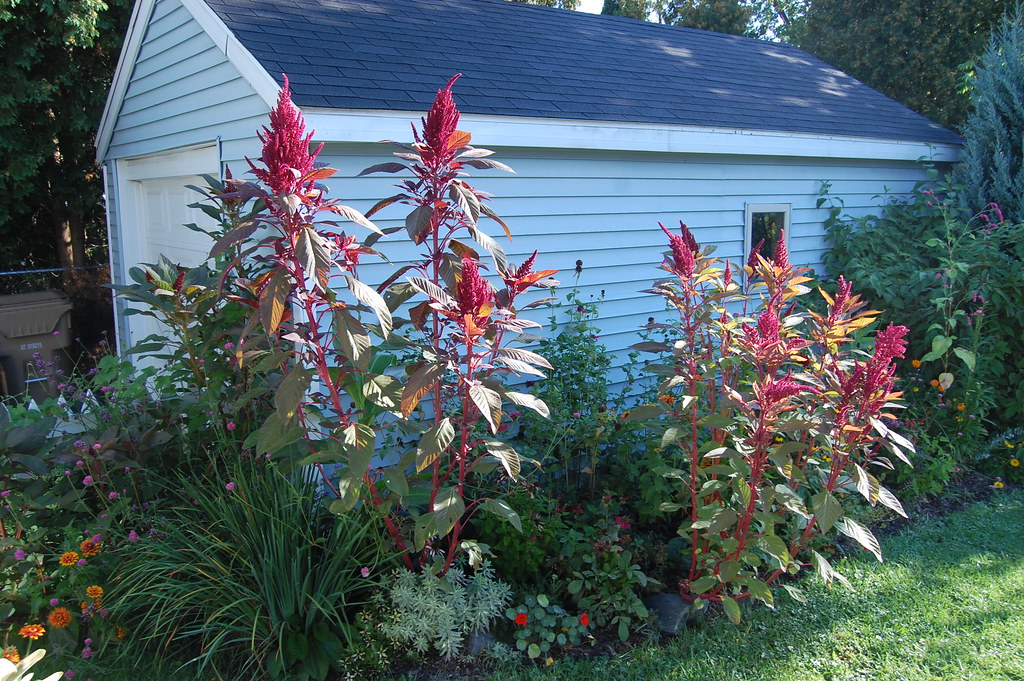
Our Amaranth which I think was ‘Red Spike’ back in August 28, 2012
I love Amaranth so much, but it hates San Francisco. Even in the relatively sunny part of town it always looked pitiful when I tried to grow it. They’re relatively easy to start from seed, but if you don’t have time for that Klein’s has TEN different ones to chose from:
‘Aurora’ (A. tricolor)–Decorative, bright yellow foliage set atop bushy lower leaves of lush, dark green produce a striking effect. Grows 3-4′ in height and is ideal for the back of the border or mass plantings. (3-pack)
‘Autumn’s Touch’ (A. cruentus)–Blending perfectly into the late summer and autumn landscape, the giant 2-foot plumes atop this red amaranth combine soft pistachio-green and bronze tones to create restful, airy beauty in the sunny annual bed. The color shades from more intense green at the base to lighter celery hues and bronze at the tips. Unusual and so pretty. Perfect for cutting for fresh or dried arrangements, these massive blooms last for many weeks on the plant, delighting the songbirds who flock to feast on their seeds all fall. 36-48” tall. (3-pack)
‘Carnival’ (A. gangeticus)–A festive combination of hot summer colors explode in gardens and landscapes. A striking foliage plant with fiery shades of yellow and red contrasting with bronze leaves. Tall purple flowers are produced in late summer. A focal point for any display. Grows to 4’. (3-pack)
‘Coral Fountain’ (A. caudatus)–A coral-pink version of languid flowing everlasting amaranth. There are so few flowers that drape from a bouquet with this kind of trailing drama, it seems every cutting garden needs a bed of caudatus amaranths. Grows to 5 feet tall. (3-pack)
‘Dreadlocks’ (A. caudatus)–Dreadlocks is an upright plant about 3 feet tall and up to 18 inches wide. Its flower stems point straight down, however, reaching 3 feet to brush the garden floor. All along the stems, closely spaced, are borne magenta blooms in big, tight, rounded 1½-inch clusters. A showstopping plant that steals the scene in garden or vase, Dreadlocks is a joyously bright, floriferous, unique Amaranthus you won’t want to miss. (3-pack)
‘Early Splendor’ (A. tricolor)–Bright crimson red on bronze leaves. Very brilliant. Grows 36-48” tall. (3-pack)
‘Flaming Fountain’ (A. tricolor)–Upper foliage teeming with red, crimson and bronze. Leaves are lance-shaped. Grows to 42” tall. (3-pack)
‘Hot Bisquits’ (A. caudatus)–Hot Biscuits is a rich amber color that seems to glow in the garden–the large burnt umber seed heads are impressive and eye-catching. Gorgeous in arrangements as well. This species was in use as a food source in Central America as early as 4000 BC. The plant is usually green in color, but a purple variant was once grown for use in Inca rituals. Grows to 6-7 feet tall. (3-pack)
‘Joseph’s Coat’ (A. tricolor) — A useful annual for extra dry areas providing long-lasting blooms and colorful foliage. Blazing colors for backgrounds, beds and flower arrangements. Prefers full sun. Revels in hot, humid weather. Edible leaves and seeds. The seeds were once a staple grain of the Americas and are making a comeback in local grocery stores
‘Redtails’ (A. caudatus)–The age old ‘Love Lies Bleeding’. Red pendulous flower spikes over arching branches. 3-5’. (3-pack)
Asclepias curassavica ‘Silky Gold’ (maybe) October 20, 2011 at Allen Centennial Gardens in Madison
I’m a sucker for anything that’ in the orangey color range and attracts monarch butterflies.
Asclepias curassavica ‘Red Butterfly’ in our Oakland garden in October 30, 2013
This is a perennial in coastal California, but I just read below folks kept it as a houseplant back in the super olden days. It never would have occurred to me to treat as a houseplant, but now I want to try it out. I’m a big fan of all Asclepias.
“ASCLEPIAS CURASSAVICA (Annual Milkweed, Bloodflower): Nonstop, 2-4” blooms that very much resemble our native asclepias tuberosa and monarch butterflies love them as much if not more. Plants are erect and bushy, growing to 36”. For full-sun in well-drained soil. Native to Central and South America. Easy to overwinter and appears in houseplant books from the early 20th century.
‘Red Butterfly’–This colorful, tropical variety grows to a height of 2 feet with bright orange and red, umbel type flower heads and glossy gray-green foliage. (3-pack)
Silky Series–The only widely available series. Available in deep red, gold and scarlet. (2 and/or 3-pack based on source)”
Bidens ‘Campfire’ October 15, 2016
Years ago when Sunset was still in Menlo Park I sweet talked this Bidens out of wholesaler there with new plants on display on the last day of Sunset Celebration. It was one of the ‘Campfire’ series, but I don’t know which one. It’s another perennial in coastal California that reseeded itself everywhere, so I never needed to buy it again. This is an exception to my multi-pack rule, but you need to splurge on a few 5″ annuals. Any of the varieties are wonderful spillers in containers.
“BIDENS FERULIFOLIA (Golden Goddess): Daisy-like blooms, rather similar to a coreopsis, with deeply cut, lacy leaves. Blooms nonstop. Plants have a tendency to be very vigorous, but are tough as nails, thriving in the hot summer sun. Prefer to be kept moderately moist, but can wilt with little damage. Very popular in the 19th century and only recently making a big comeback. Attracts butterflies.
Campfire Series–With its delicate 1 inch blooms, Campfire™ is a long blooming annual gracing your garden with color from spring until the first frost. Very heat and drought tolerant, the mounding trailing habit of Campfire™ The perfect addition to landscape designs and in combination planters. Grows to 8-12” tall with an 18-24” spread. Available in ‘Flame’ (bright orange). (5” pot)
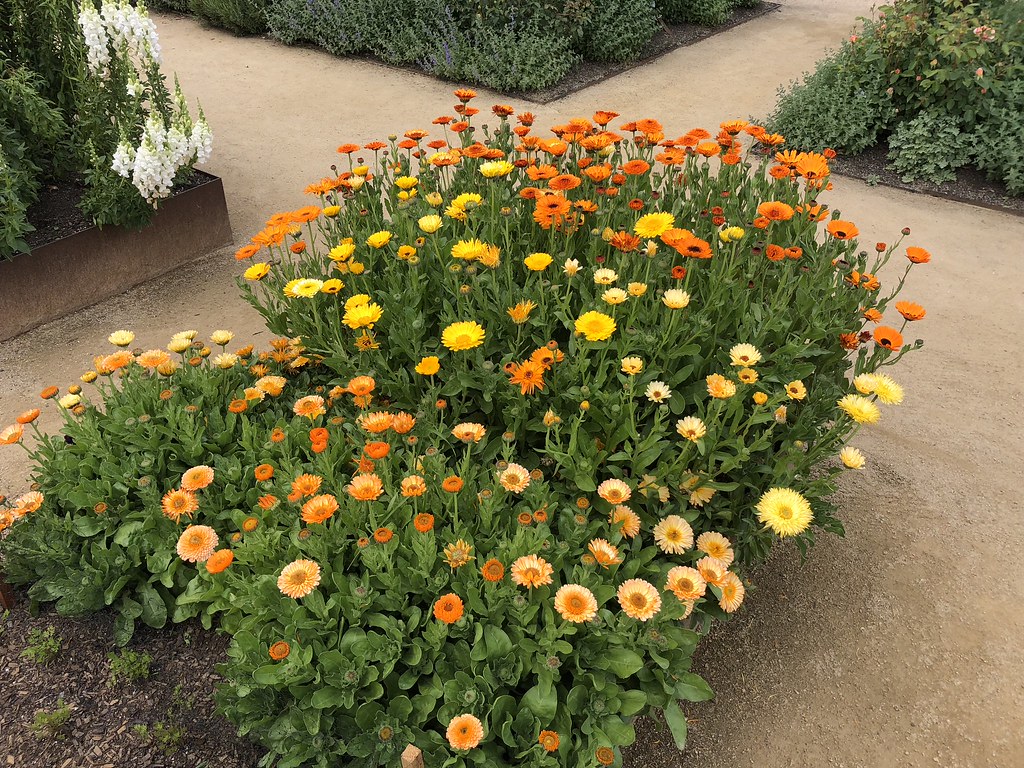
Calendula explosion at Cornerstone Sonoma April 27, 2018
I’m pro any type of Calendula and Klein’s has a nice selection. As a former attractive salad grower (something I’d like to revive) Calendula is pretty darn easy to start from seed and makes your salads even more beautiful with their petals. I didn’t realize you can eat the leaves until just now.
“CALENDULA OFFICINALIS (Pot Marigold): Edible flower. Petals used to color foods to replace saffron. Easy to grow annual. Enjoys sunny, cool conditions. Prefers well drained, moist soil. Tall varieties make great cut flowers. Self-sows easily. Leaves are also edible.”
Celosia Bouquet, Davis Farmers Market September 9, 2017
I LOVE all Celosias! How can you not love a flower that looks like brains? I love the non-brainy feathery ones, too. It’s another one that didn’t love SF’s cold summers. Klein’s has FIFTEEN different types! My favorites are the kinds that grow tall, but check out ‘Dracula’, what a weirdo. You could even do a Celosia container of craziness with tall, medium and short guys.
“CELOSIA, COMB-TYPE, Celosia argentea cristata: A mutation of the plumosa types described below forming crested flowers like a rooster’s comb. Excellent in fresh or dried arrangements. Selection may change throughout the season based on availability from outside vendors.
Chief Series–A series of celosia bred especially for cut flower purposes. Uniform growth with a wide range of flower colors. Tall plants with huge 6” cauliflower shaped combs. Mix comes in colors of dark red, carmine, rose, gold and red and yellow bicolor. Perfect for hot, sunny locations. Height: 36-40”. (4-pack)
Cramer’s Z–A floral novelty with versatility. Unique Celosia with 6-8 in. long, spikelike, brilliant magenta blooms on top of long, strong stems. Each plant produces 8-10 stems perfect for cutting. Makes a great landscaping item. Up to 48” tall. (3-pack)
‘Dracula’–A novelty comb celosia that is a first-of-its-kind showing off one big, 6 to 7″, flower on top of each plant. In the greenhouse, combs are red and foliage is green with some red. But once outdoors, foliage is darker and more purple-tones and comb is darker purple. Unusual shaped and eye-catching color adds drama to landscapes, gardens and containers. 8-16” tall. (5” pot from outside vendors)
‘Prestige Scarlet’–A 1997 AAS Winner. An exceptional heat-tolerant landscape performer. The 15-20” plants produce 3 1/2” combs and continue to branch after the central flower emerges. Will reach a spread of 18-20”. (4-pack)
CELOSIA, FOLIAGE-TYPE, Celosia argentea hybrids: With limited options for attractive foliage plants from seed, growers often turn to coleus to add interest and texture to containers. These new celosia hybrids are grown for their stunning foliage, rather than their flowers. Sun-loving foliage accent plants for patio planters with a different texture and look, as well as for quick-growing, low, shrub-like plants that look great at the front of the border.
Sol Series–Two distinct bicolor foliage patterns are featured in this collection. Grows 20-14” tall and wide. Available in ‘Gekko Green’ (green foliage flushed with burgundy and purple) and ‘Lizzard Leaf’ (burgundy red foliage). (4-pack)
CELOSIA, PLUME, Celosia argentea plumosa: A plant of tropical origin, the shiny, deep maroon or bright green leaves are topped by tiny flowers clustered into plumy feather dusters, generally in shades of red, yellow, orange or shocking pink. Remove any existing blooms when planting out for best success. Excellent in fresh or dried arrangements. Grow in full sun. Selection may change throughout the season based on availability from outside vendors.
Century Series–Large, beautiful plumes with great basal branching. Outstanding garden performance. An AAS Winner from 1985. Usually available in red, yellow and a mix from outside vendors. (4-pack)
‘Dragon’s Breath’–Look forward to an abundance of vibrant red foliage that will add spectacular color and texture to mixed containers and landscapes! An extra-large, late blooming variety with gorgeous fall flowering plumes of color. Spreads to 16. 24″tall. (5” Pot from outside vendors)
Fresh Look Series–At 20-24” tall, these basal-branched plants are topped by plumes up to 10” tall. Vigorous, with outstanding garden performance. New leaves cover old plumes so plants always look good. Available in gold (a 2007 AAS Winner), orange and red. (4-pack and/or large 6-pack from outside vendors)
‘New Look’–A 1988 AAS Winner. Glowing deep red plumes atop bronze foliage. Grows to 15”. Stunning in the landscape. Great basal branching. (4-pack and/or large 6-pack from outside vendors)
‘Sylphid’–Green-yellow feathery plumes sit on tall straight stems. The perfect color for every garden and bouquets. 30-40” tall. (4-pack)
CELOSIA, WHEAT, Celosia argentea spicata: Taller, more open and less flamboyant than the plumosa types. Well-suited for the wildflower garden. Excellent in fresh or dried arrangements. Grow in full sun.
‘Flamingo Feather’–Light pink, wheat-like plumes which fade to white under high heat. Harvest early to retain color. Tassle-like plumes are 2-3” long atop 18-26” stems. (4- pack) ‘Flamingo Purple’–Very upright habit. Bushier, twice as large and later to bloom than Flamingo Feather. 3-4’ tall. (4-pack)
Kosmo Series–Fleuroselect Quality Award Winner. Genetically dwarf strain. Upright main stem gives rise to multiple flowering side branches. Flower heads contrast nicely with dark green foliage. Excellent performer in the landscape or in containers. Does best in full sun to light shade and average soil with good drainage. Just 8” tall. Available in orange, purple-red, salmon and yellow. (4-pack)
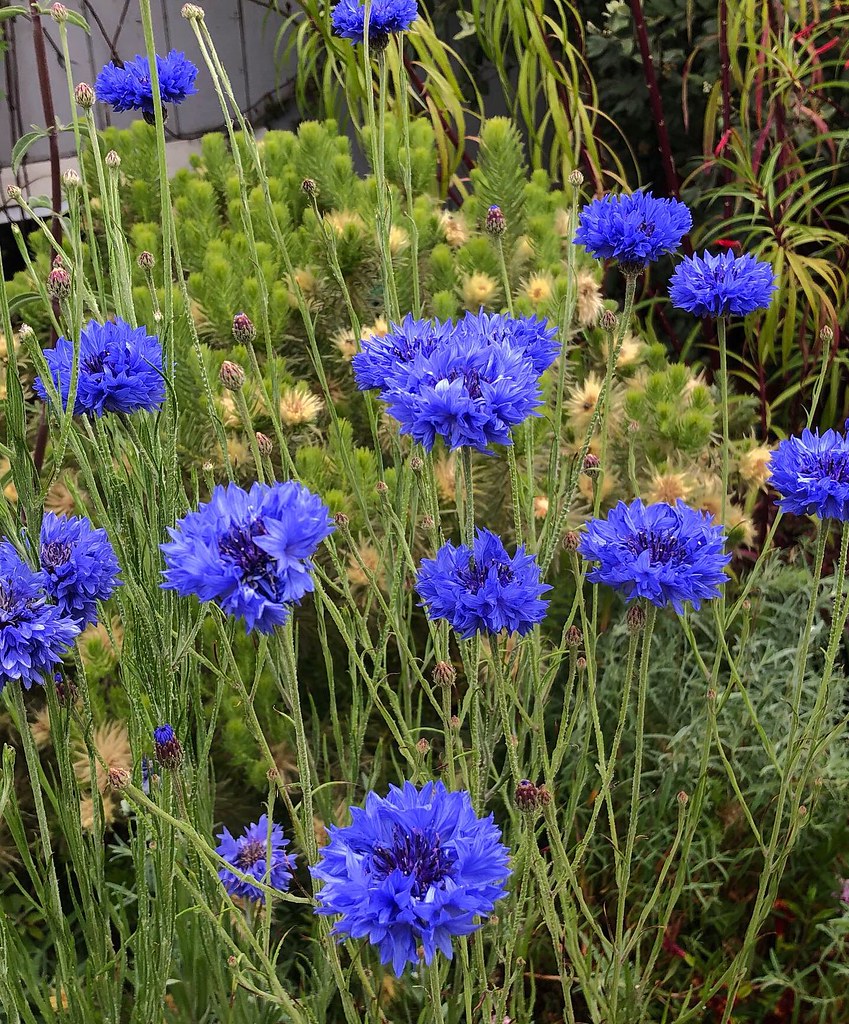
Centaurea Bachelor’s Buttons, October 29, 2019
Another one of my most favorite flowers and it’s easy to direct seed.
Coleus craziness Wisconsin Dells, July 27, 2017
Coleus is so cool it deserves it’s own post and for the most part the leaves pretty much sell themselves in the nursery. Klein’s has a ton of great ones, I’m not going to go in to lists. Someone posted a lame Coleus flickr picture I took on Pinterest and the number of views it gets is staggering. Something tells me I’m going to have a Coleus problem when we get back.
Mystery Cosmos in SF September 4, 2011
I’m not sure what the Cosmos above is, it’s similar to the super tall guys listed below, but better. I don’t have any other pictures of Cosmos except for the orange one unfortunately. My dad always planted these when I was a kid. I’m not a big fan of the shorter varieties, but the tall ones are fun.
“COSMOS BIPINNATUS: This airy stemmed, graceful plant is easy to grow in beds, backgrounds or cut flowers. Requires full sun, good soil and wind protection. Tall varieties may require staking. Do not fertilize. Deadhead regularly to prolong blooming. A classic for the cottage garden.
Sensation Mix–36-48” tall. Elegant, daisy-like blooms in pink, rose, crimson and white. Attractive fern-like foliage. An easy-to-grow favorite for the cottage garden. (4-pack and/or large 6-pack from outside vendors)
Dahlia bouquets at the Ferry Building in SF, June 19, 2014
Like Coleus, Dahlias come in tons of super cool shapes and sizes. Klein’s has tons of great options. Mine always got powdery mildew in SF, so I didn’t grow them much myself. I’m hoping that will change next summer. Check out Floret Flower’s Discovering Dahlia book and their website in general for tons of great cut flower information and gorgeous pictures.
Gomphrena ‘Fireworks’ July 13, 2012
So after I had Zoe I stopped labeling my pictures and especially plants. I’m sure I have tons of cool Gomphrena pictures since I love them all, but since none of them are tagged except this one I can’t find them. ‘Fireworks’ appears to the the old skool version of ‘Truffula Pink’. Dang, ‘Horton’s Revenge’ looks super cool with it’s limey green leaves, the link I added goes to cosmic something, but I think they’re the same plants.
GOMPHRENA GLOBOSA (Bedding Globe Amaranth): Well-branched upright plants produce continuous bouquets of brightly colored, clover-like blooms all summer long. Harvesting promotes flower production. Grow in average soil with good drainage in full sun. Both heat and drought tolerant. A must for the dried-flower garden!
Buddy Series–Ball shaped, compact plants. Excellent for bedding and pots; good weather tolerance. Grows to 8” tall. Available in purple, rose and white. (4-pack)
‘Horton’s Revenge’–Bright chartreuse foliage with magenta globe amaranth flowers; Wonderful in containers as a contrasting pop of color. Grows to 15-24” tall. (5” pot)
Ping Pong Series–This series delivers an explosion of color in containers and mass plantings. It also adds height and dimension making it terrific as a garden cut flower. Grows to 20” tall. Available in lavender, purple and white. (4-pack)
GOMPHRENA HAAGEANA (Tall Globe Amaranth): Tall, cut flower versions of the shorter bedding globe amaranths. Grow in similar conditions in full sun.
Qis Series–QIS Series is an ideal selection for either landscaping or bouquets. Loose, open-branched, and great for cutting beds and mid-borders. 24-30” tall. Available in carmine and purple. (4-pack)
‘Strawberry Fields’–A popular cut flower grower favorite, Strawberry Fields gomphrena provides an abundance of strawberry-red globular flowers on tall branching plants. Flowers are produced from summer to early fall and are great for cutting and drying. Grows to 22” tall. (4-pack)
GOMPHRENA PULCHELLA (Globe Amaranth): ‘Truffula Pink’–Looking for a different annual to add some pazazz to your garden? ‘Truffula Pink’ gomphrena is a tough, low-maintenance plant with long-lasting, intense iridescent pink blossoms tipped with yellow. This cultivar grows quickly to form a full, dense basal clump of leaves 2.5-3 feet or more across, then produces numerous long, sturdy but thin, upright flower stems 3 feet tall with just a few narrow leaves along those stems (reminiscent of Verbena bonariensis, all stems and flowers with little foliage). A sure-fire winner in the landscape. (5” pot)
Marigold ‘Harlequin’ October 30, 2013
Marigolds are magnificent. I like the French and African ones that get tall, but Klein’s doesn’t seem to have any. I also like the tiny flowered little signet guys. Marigolds are super easy to start from seed like my favorite ‘Harlequin‘ above. Select Seeds has some great varieties, I love ‘Burning Embers‘.
“MARIGOLD, Tagetes erecta (African), patula (French), tennuifolia (signet) and anisata (sweet mace): Marigolds are among the most popular annuals and among the easiest to grow. There are two types of marigolds: African (or American) and French. French marigolds are free-flowering, trouble free plants excellent for bedding, edging or containers. They are shorter and bushier. Flowers can be double or single and are available in all the marigold colors including red. African marigolds are taller and best used in backgrounds and borders. They take longer to bloom and do not have red in their color range. Flowers can be up to 4” across. There are now also triploids, which are a combination of the two. Marigolds thrive in full sun in average garden soil. Deadheading is necessary to keep a neat appearance. Almost all marigolds have a distinctive, pungent fragrance. Tall varieties make great cut flowers. Selection may change throughout the season based on availability from outside vendors.
Durango Series–French. Large 2-2 1/2” anemone-type flowers on strong stems. Early and free-flowering plants have a uniform height of 10-12” and good branching. Available in Bolero, Flame and yellow from outside vendors. (4-pack)
‘Fireball’–French. Three different flower shades on one plant! The buds burst open to first reveal a cluster of deep-red petals; these then take on shades of fiery bronze, and finally turn a lovely rusty orange, giving the look of three different colored blooms on the same plant. Grows to about 12” tall. (4-pack)
Gem Series–Signata type. Many small, single flowers on 10-12” plants. Unique fragrant, lacy foliage. Wonderful in salads. Available in lemon yellow, red, tangerine and a mix. (4-pack and/or large 6-pack by color)
‘Strawberry Blonde’–French. A breeding break through has created a new French marigold with flowers in totally unique russet tones; bringing pink shades to the marigold color palette for the very first time. Great as a ‘mixer’ but it truly comes into its own when planted en masse in drifts or blocks. 10” tall. (4-pack and/or large 6-pack from outside vendors)
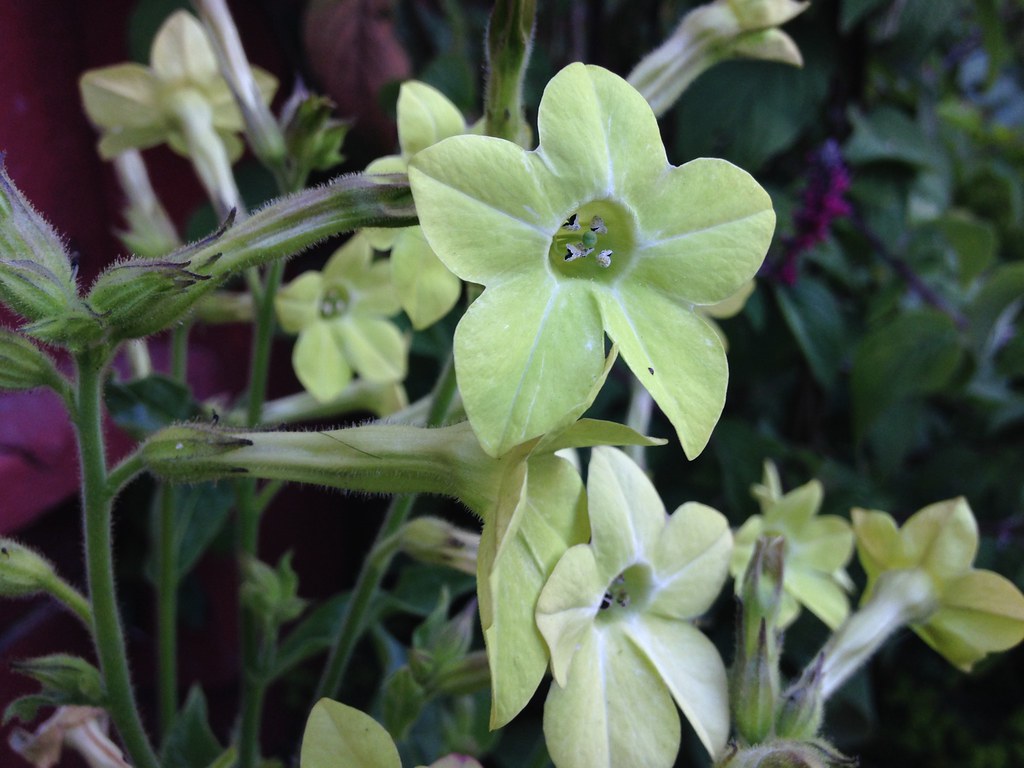
Nicotiana alata ‘Lime Green’ April 10, 2015
Once I learned how to pronounce Nicotiana I liked them more. I don’t even remember growing the guy above, but I did and took pictures. Nicotiana’s are cool and Klein’s has a bunch of good ones. ‘Lemon Tree’ and ‘Tinkerbell’ are really cool and ‘Only the Lonely’ is giant and fun.
NICOTIANA (Flowering Tobacco): A very old-fashioned and fragrant garden favorite. Fragrance is especially strong in the evening although modern hybrids devote more energy in flower size, color and the fact that they stay open all day, rather than the fragrance. Blossoms are star-shaped and perform all summer long. Performs best in fertile, well-drained, moist soil and tolerant of a bit of shade. Fertilize regularly and deadhead spent blooms. A native of South America and a close relative of petunias, nicotianas are hummingbird magnets.
Daylight Sensation Mix–A brilliant color range with many new colors. Blooms remain open all day on 3’ plants. (4-pack)
‘Lemon Tree’ (N. langsdorfii)–Well-known green flowering nicotiana for tall borders. This species from Brazil and Chile produces lovely apple-green blooms that add a unique splash of color to any garden. The long sprays of flowers are great for arranging. Grows to 3-5’. (3-pack)
‘Only the Lonely’ (Nicotiana sylvestris)–Makes an impressive statement in the garden! Towers above all other plants in the border. Large rosettes of bright green leaves 2’ long and up to a foot across develop tall bloom stalks that bear clusters of fragrant, white, drooping, tubular flowers 3 1/2” long and 1 1/2” across at the mouth. Blooms open in the early evening and bear a rich jasmine-like perfume. Blooms late summer till frost. Height 48-60”. Partial shade. (2 pack and/or 3-pack)
Perfume Series–Produces an abundance of 2” blooms held upright above the 16-20” plants–the flowers are highly scented at night. Beautiful in the landscape or in containers. Available in deep purple (a 2006 AAS Winner), a mix and other colors from outside vendors. (4-pack)
‘Tinkerbell’ (Nicotiana x sanderae)–Ideal for adding height and interest to the garden, flowering over a very long period. At 36” tall, this flowering tobacco has clusters of flowers with dusky rose petals, lime green backs and unusual azure pollen in the center of each flower. For a sunny spot with well-drained soil. (3-pack)
Other varieties: Usually other varieties and colors become available to us from outside vendors including; ‘Appleblossom’, lime green, purple shades and mixes.
Salvia greggii ‘Raspberry Royale’ October 25, 2011
Salvias are a sad spot for me. They’re perennials in coastal California, and I love them. Quite are short lived though, and I was excited to see that there are lots of good Salvias I can grow in Wisconsin. I even found this cool article about growing S. coccinea from the UW Horticulture Extension. I would definitely splurge on some 5 inchers in this department if you want hummingbird action. I left off pineapple sage, since it’s more herby, but always a good one. Here are my favorites from Klein’s long list:
SALVIA COCCINEA (Texas Sage): The open, lacy effect of long flower spikes on bushy plants is effective for an extremely long bloom season from early summer till frost. In spite of its delicate appearance, this is one of the easiest and toughest annuals., very tolerant of heat, drought and a wide variety of soil conditions. A magnet for hummingbirds.
Hummingbird ‘Forest Fire’–Stunning combination of fiery red flowers against black calyces. Heat and drought tolerant plants are earlier, slightly shorter and more freebranching than ‘Lady in Red’. (4-pack)
‘Lady in Red’–1992 AAS Winner. Brilliant scarlet, trumpet-shaped flowers are produced in loose spikes of flowers concentrated in whorls around the main spike. Earlier and shorter than other strains, the neat plants reach 20-24” in the garden. Adapts well to containers. Plant in full sun to part-sun. (4-pack)
Nymph Series–A very long-blooming cultivar that responds well to constant deadheading. Long flower sprays on bushy plants. Low maintenance and thrives in all climates. Lovely in wildflower gardens or in large containers. Grows to 24-26”. Available in coral and ‘Snow Nymph’ (pure white). (4-pack from outside vendors)
Summer Jewel Series–Plants are densely branched producing a tidy plant habit that will excel in both garden beds and containers. Early to bloom by almost two weeks compared to other S. coccinea varieties. 18-20” tall. Available in red. (4-pack from outside vendors)
SALVIA FARINACEA (Mealycup Sage): A native American tender perennial. Easy to grow, it has beautiful spikes of steely gray-blue or steely white. It grows wild in Texas and New Mexico from early summer to fall. With its persistent long bloom, it is valued as a cut flower and is easily dried for winter arrangements. Very disease resistant. Plant in full sun to light shade. Roots can be dug and stored in the fall like geraniums for planting the following season. Selection may change throughout the season based on availability from outside vendors and may include any or all of the following:
‘Blue Bedder’–Produces vibrant deep blue flowers until hard frosts. Twice the size of the ordinary blue salvia (Victoria). At 30″, this old fashioned, heirloom strain is nearly as tall as its wild Texas parent. It produces vibrant deep blue flowers until hard frosts. (4-pack)
SALVIA GREGGII (Autumn Sage): A short, shrubby species with leathery, crinkled leaves on branching, nearly woody stems. Spikes bear pairs of 3/4” flowers, each with and extended lip. Blooms from late summer till frost. Needs perfect drainage in average to poor soil. Full sun to part shade. Prune back occasionally for more compact growth. Grows 1-2’. Like all salvia–a bee and butterfly magnet.
‘Lipstick’–One of the best performing of the Texas sage. 3’ plants are coated with lipstick-red blooms all summer long, each highlighted by a white throat. A hummingbird fiesta! (5” pot from outside vendors)
SALVIA GUARANITICA (Blue anise sage, Brazilian blue sage): Shrub-like plant with wrinkled, fuzzy, medium green leaves. Blooms late summer to fall. Striking 2” long flowers in blue, purple or white, usually with darker purple calyces. Prefers a light shade instead of full, hot sun and evenly moist soil. Produces tuberous roots that are stored overwinter like a dahlia. Perhaps the one plant type that will draw the most hummingbirds to the garden! Most grow 4-6’.
‘Black & Bloom’–Makes a big impact with a thicker leaf, bigger bloom and darker stem than the old ‘Black & Blue’. Tough as nails – it thrives in heat, drought and humidity. Very fast to finish and easy to grow, requiring very little attention. Desirable deep blue color against a black stem stands out in every landscape or container. Grows to 36-48” tall. (5” pot)
‘Blue Suede Shoes’–Features light blue flowers with a black calyx on tough upright growing plants that hummingbirds love! Use them as the center thriller in combinations or in the landscape. Grows to 40” tall. (5” pot) ‘Purple & Bloom’–Selected for its exceptional flower power and smaller stature similar to Black & Bloom making it a good candidate for medium to large containers. This new salvia is 25% more compact than the leading competitor. Grows to 36-40” tall. (5” pot)
‘Rockin’ Series-Upright compact plants with green foliage. Blooms attract hummingbirds and butterflies all summer until frost. Plant in part to full sun for best performance. 30-40” tall. Available in deep purple and fuchsia (bright pink). (5” pot)
SALVIA INTERSPECIFIC HYBRIDS:
‘Roman Red’–This is the only vibrant red, interspecific salvia on the market! Has a more compact habit compared to the leading competitor’s red, along with medium green foliage. More similar in habit and performance to ‘Black & Bloom’, with a semi-mounded habit. Offers exceptional landscape performance when compared to Salvia splendens. 28-34” tall. (5” pot)
‘Wendy’s Wish’–Fascinating, jumbo, shrimp-like buds emerge from soft coral pink bracts and open to hot pink, tubular blooms. Attractive deep green leaves have dark maroon stems. Compact and slightly spreading. The plant appeared as spontaneous garden hybrid beneath a plant of Salvia mexicana ‘Lolly’ in the Victoria, Australia garden of salvia enthusiast Wendy Smith. The corolla appears to resemble S. buchananii in color and flower size, but the calyx somewhat resembles some Salvia splendens varieties For full sun. Blooms from summer through fall. Plant in fertile, well-drained soil in beds or borders. 30-40” tall and up to 30” wide. (5” pot)
SALVIA LONGISPICATA x S. FARINACEA:
‘Big Blue’–A vigorous flowering annual in a clear blue color. The first interspecific salvia from seed. It boasts large flower spikes on a huge plant. Can grow to 3’ tall. For full sun to part shade. (5” pot)
‘Mystic Spires’–An outstanding 2006 introduction. Large true blue flower spikes wave above the dark green foliage. Often 1’ long, the spikes are slightly fuzzy. Naturally compact and well-branched, this is a dwarf version of the popular, but large, ‘Indigo Spires.’ Overall, the plant looks like a giant ‘Victoria’ blue salvia. Unlike many salvias, it comes into bloom very quickly and flowers continuously until a hard freeze. Requires well-drained soil in full sun. Grows to 2-3’. Like all salvia, it’s a bee, butterfly and hummingbird magnet. Excellent cut and dried. Roots can be easily stored overwinter. (5” pot)
‘Playin’ the Blues’–A fragrant thriller for your containers and landscape. Standing 24-48” tall, the purplish blue spikes of Playin’ The Blues create a great focal point for mixed containers. This continuous blooming salvia is sterile which means more flowers for you. Planted in full sun you may enjoy the flutter of butterflies and hummingbirds checking out the blooms. Drought tolerant and deer resistant are just two of the great attributes. (5” pot)
SALVIA SPLENDENS (Scarlet Sage): Erect spikes of brilliantly colored blooms. The red varieties are especially attractive to hummingbirds. Very old-fashioned and versatile whether in beds or containers. Prefers a well-drained, moist soil in full sun or light shade. Spacing depends upon the size of the variety. Selection may change throughout the season based on availability from outside vendors and may include any or all of the following:
‘Bonfire Elite’–Dark green foliage and strong basal branching supports plentiful, closely spaced, intense red flowers. A strong garden performer. Grows to 26”. (4-pack)
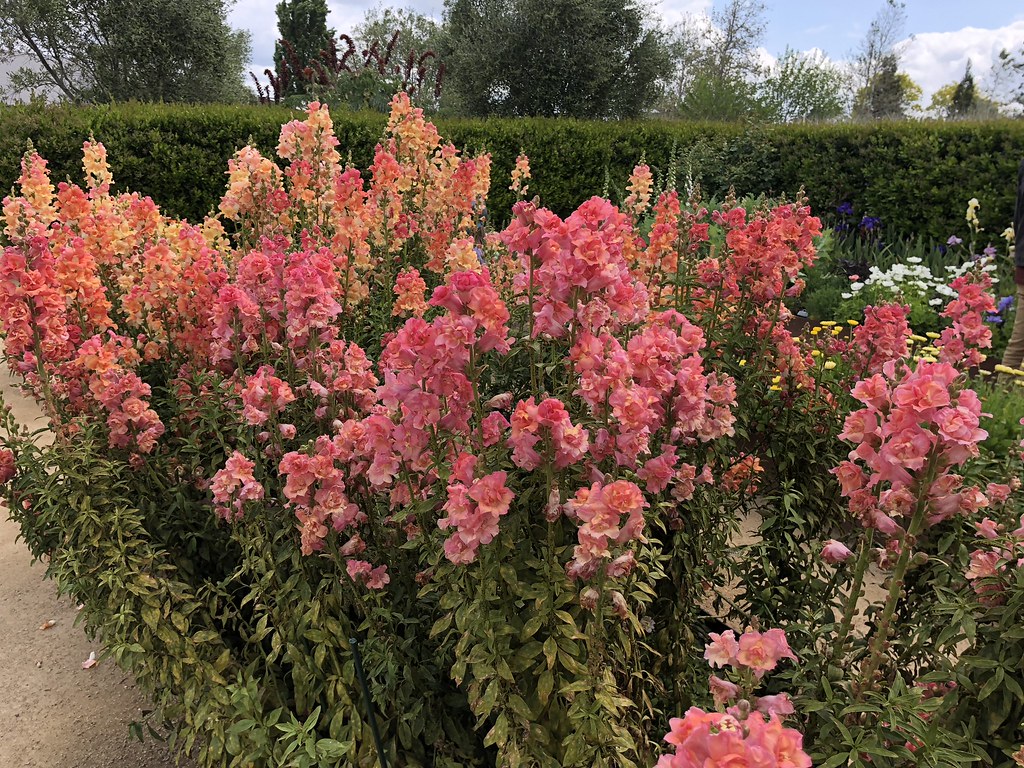
Snapdragon magic at Cornerstone, Sonoma April 27, 2018
I’ve been a snapdragon lover since I was a kid when I learned you could make little flower puppets with them. Maybe not so much on these crazy doubles above. I like the tall, non-bright yellow ones the most and Klein’s has some great choices. The ones above look like they could be a ‘Madam Butterfly’ selection.
SNAPDRAGON (Antirrhinum majus): The lavish color of modern hybrid snaps is provided over a long bloom time and in many sizes, from dwarfs ideal for bedding, to giants that are among the finest of all cut flowers. Flower colors tend to be bright and clear and are sometimes fragrant. Snaps prefer full sun and average garden soil. They bloom all summer long, but less profusely during hot weather. They sometimes survive through mild winters or if well protected. Selection may change throughout the season based on availability from outside vendors.
‘Madame Butterfly’–Double, azalea-flowering snaps. Base-branching, 24-30” plants in a wide range of colors. A past AAS Winner. A great cut flower. (4-pack)
Rocket Series–Long flower spikes with well-spaced florets on vigorous, heat resistant plants. Superior for backgrounds or cut flowers. Will bloom again once cut. Plants grow 30-36” tall. Available in various colors from outside vendors. (4-pack from outside vendors)
Sonnet –A very refined, early and extremely free-flowering snap, growing to a height of 20” The dense main spike is followed by numerous secondary spikes. Wind resistance and heat tolerance make this an excellent landscape candidate. Available in various colors from outside vendors. (4-pack from outside vendors)
I have visions of growing flowers for making dried flower wreaths and have never grown statice before. I want really want to though. Klein’s only has the shrimpy little strawflowers listed, which I like but not as much as the tall ones.
“STATICE, ANNUAL, Limonium sinuatum: Unmistakable plants form a groundhugging rosette of dark green, wavy, deeply lobed leaves. Flower stems are stiff and leafless, rising straight upward, then branch at the tips into an intricate candelabra of one-sided flower clusters. Flowers are colorful and long-lasting and are a staple both fresh and dried. Pick flower stalks when they are about 2/3 open. Statice requires a sunny spot with well-drained, even sandy soil and is very drought tolerant.
QIS Series–Very uniform in color, flower size and stem quality. The best strain for cut flower production. Grows to a nice tall 28”. Available in a mix of colors. (4-pack)”
Sunflowers at the Dane County Farmers Market, October 22, 2011
Sunflowers are pretty darn easy to start from seed. I’ve always wanted to plant a sunflower fort with a bunch of Mammoths and other big guys. If you don’t have time for all that seed business, here are my favorites on the list. I tend to like the taller, multi branching ones with pollen the most. I’m intrigued by the hybrids, especially ‘Sunfinity’ five seeds are almost $10 online.
SUNFLOWER, Helianthus annuus (Annual Sunflower): Fun, easy-to grow and perfect for backgrounds and beds. Tolerant of heat and drought. Plant in full sun. For maximum height, fertilize weekly with a liquid fertilizer. Excellent to attract birds and great for a kids’ garden. Flowers may be up to 12” across and can be single or double. Seeds of all varieties are, of course, edible. Many varieties make an excellent cut flower. Can grow up to 10’ or more or as small as 18” depending on variety.
‘Mammoth’–Plants are 7’ feet tall with large 12” yellow heads. Excellent for background plantings or for screening purposes. Each plant produces one flower. Seeds are gray and white striped. Usually requires staking. (3” fiber pot)
‘Suncredible’ Yellow–Bright, 4 inch golden yellow blooms from early season through the fall. This powdery mildew resistant variety forms a 24- 48 inch mound that continuously blooms all season without the need for deadheading. 24-40” tall. (5” pot)
‘Sunfinity’-A revolutionary new sunflower, Sunfinity will thrive and bloom continuously all season long. Traditional sunflowers bloom late in the summer and the single blooms are enjoyed for only a short time. Sunfinity comes into bloom in late spring and keeps on growing long after traditional single-stem sunflowers have bloomed and died. Sunfinity Sunflowers have lots of blooms that can be cut. Grows 3-4’ tall. (5” pot)
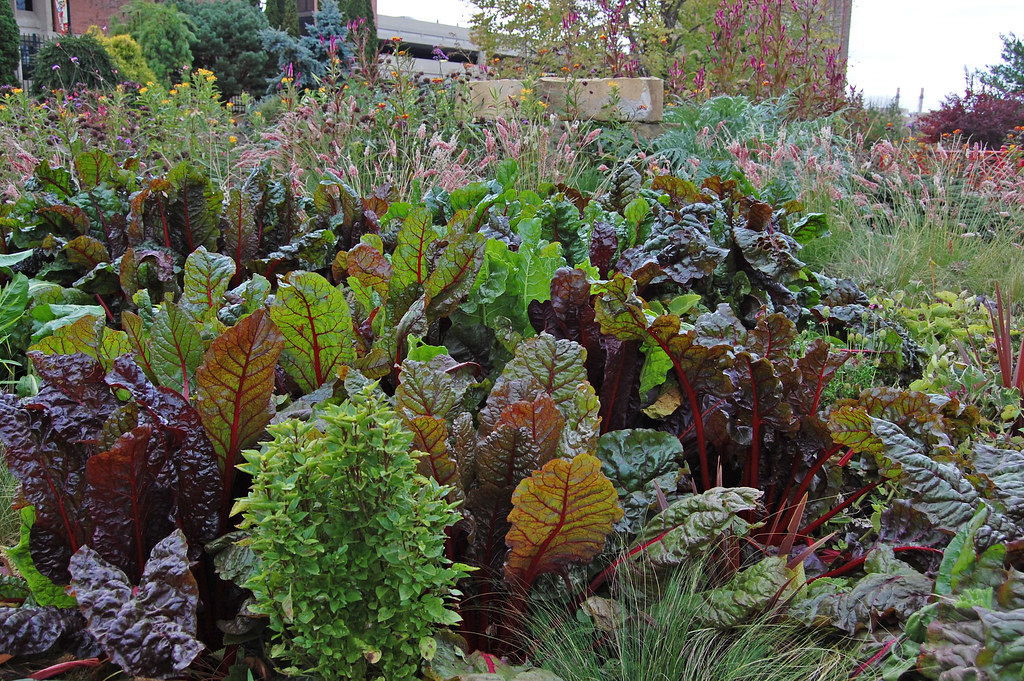
Swiss chard at Allen Centennial Gardens, October 20, 2011
As a strong believer in using all the kales as decorative plants, chard is another veggie that’s fun to plant as an ornamental. It’s great for early/late containers when temps are cool.
SWISS CHARD, Beta vulgaris: Chard makes a lovely addition to the mixed flower bed or containers. The stems of many varieties are brightly colored and the leaves offer delightful texture to the landscape and pots. This cool season edible green is a very close relative of the beet (whose foliage and stems are also delicious). Though more heat tolerant than most greens, chard is at its peak in early summer and again in the fall when the weather turns cooler. Though usually sown directly into the garden in early spring, chard transplants rather easily. Both the stems and leaves of chard are used in salads and sautees. When sauteed, the chopped stems should be added a few minutes before the leaves to ensure tenderness. The leaves can be used like and make a great substitute for spinach. Harvest as needed.
‘Bright Lights’–Probably the most beautiful of the chards with stems in shades of gold, pink, orange, purple and white and hints of every color in between. The flavor is milder than many chards. Grows to 20” tall. A 1998 AAS Award Winner. (4-pack)
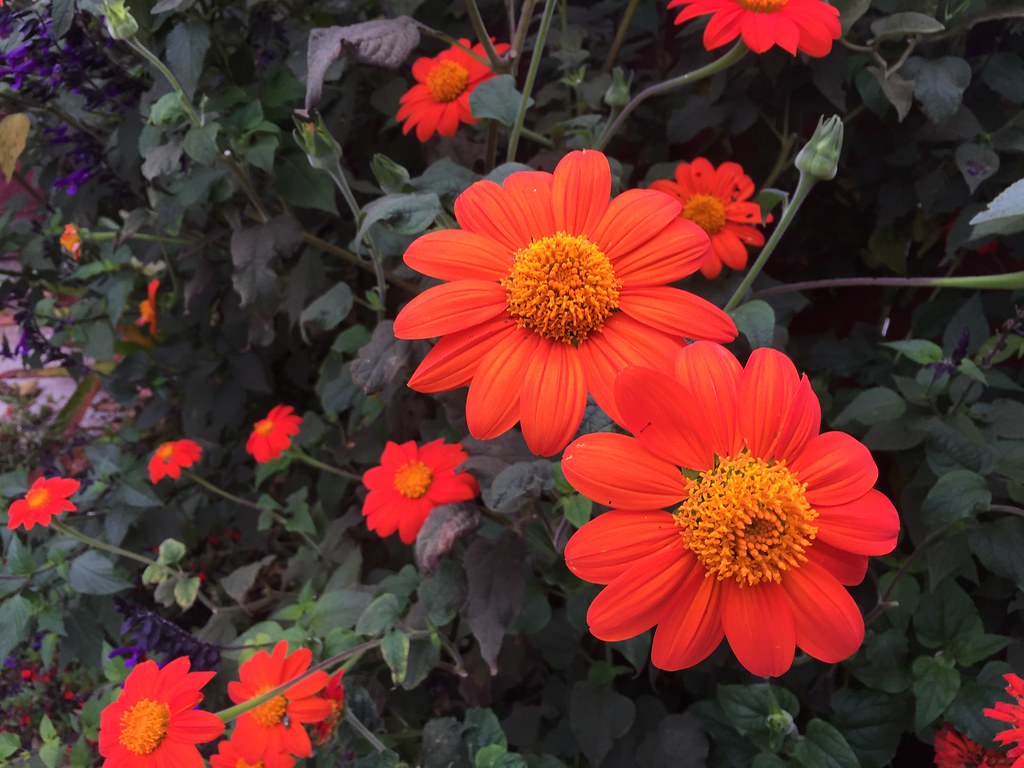
Tithonia rotundifolia, August 30, 2017
One of my all time favorites, it’s the perfect orange, sunflowery, multi-branching plant and easy to start from seed. The Fiesta one below seems a little shrimpy only growing to 2-3 feet tall, but I can see how that size would be useful.
TITHONIA ROTUNDIFOLIA (Mexican Sunflower): A fast growing, easy-to-care-for annual that provides spectacular bloom over a long season. Tall and abundantly branched with dark green leaves and loads of orange and yellow zinnia-like flowers. Very heat tolerant. Attracts butterflies. Older varieties can grow up to 7’.
‘Fiesta del Sol’–2000 AAS Winner. The first truly dwarf tithonia. Single, 2-3” daisy flowers on lush, green foliage, excellent for cut flowers and attracting butterflies. Pest free. Thrives in summer heat and humidity. Plant in full sun. (2-pack)
My only crappy picture of Trachelium caeruleum at the Wave Garden in Richmond, October 20, 2013
Don’t let that crappy picture above sway you from this cool, and not easy to find plant.
TRACHELIUM CAERULEUM (Throatwort): The flower heads of this unusual annual are huge! They are made up of hundreds of tiny, trumpet-shaped, purple, pink or white, lightly perfumed flowers that create an airy mass up to a foot in diameter. Plants are shrub-like, with sharply toothed, dark green leaves and reddish branching stems. Excellent cut flower. Attracts butterflies. Plant in full to part sun.
‘Lake Michigan Series’–Upright habit grows to 28-48” tall. One of the best cutting types from the Lake Series. Available only in a mix and not individual colors. (2-pack)
My Happy Place Verbena bonariensis, Cornerstone Sonoma June 17, 2018
Few plants make me happier than Verbena bonariensis, especially the masses of them at Cornerstone. Our plant reseeded every year in SF and I would let them live in the cracks. They grew taller than me and would grab you on the way in to the house. Heck I even planted one, so I could see the flowers through my kitchen window and release butterflies on them. I’m not so sure about the new fandangled ‘Meteor Shower’ since I’d rather have purple than pink blooms, but ‘Buenos Aires’ looks like a good one. I’ve also not grown many of the shorty verbenas before, but feel like I should investigate as they seem like a lot of fun.
VERBENA BONARIENSIS (Brazilian Vervain): This outstanding annual or deserves its popularity. It makes an architectural statement with slender, willowy stems that stand up to 6 feet tall and do not need staking. It then branches out widely near the top where rich lilac-purple flower clusters stand alone, as if they are floating. This verbena makes a great see-through plant. A wonderful cut flower and a bee and butterfly magnet. Self sows readily where growing conditions suit it.
‘Buenos Aires’–A free-flowering novelty cut flower and an excellent garden plant. Uniform 3-4’ plants are covered with vibrant lavender flowers atop strong, wiry stems. Easy to grow and heat tolerant. Don’t let the height scare you in that plants are so airy they are virtually see-thru and, therefore, usable near the front of the border. Surely a conversation piece. (2-pack)
‘Meteor Shower’–New from Proven Winners. An airy, tall variety with a long bloom period; pinkish-purple buds that open to lilac flowers, that will eventually mature to nearly white; a great plant for borders or containers. Meteor Shower Verbena features airy clusters of lilac purple flowers with violet overtones at the ends of the stems from late spring to mid fall. The flowers are excellent for cutting. Its narrow leaves remain green in color throughout the season. 30” tall. (5” pot)
Viola freakout at Cornerstone in Sonoma, April 27, 2018
Violas and pansies love the cool SF weather, so you could grow them all year round. I love them all, especially the orange ones. They’re even relatively easy to start from seed. I tend to go for the smaller flowered violas over pansies, but ‘Frizzle Sizzle’ is super cool. The viola Sorbet series is also adorable. They make salads so cheery you can candy them, too. It’s also one of the first things you can plant that will survive the “freak” April snowstorm.
VIOLA HYBRIDS (Johnny Jump-up): The small-flowered pansy. Violas can actually be considered hardy perennials in mild winters and self-sow readily in either case. Flowers are longer lasting than pansies and are edible. Space plants 6” apart in full sun to light shade in loose, fertile loam soil. Water frequently. Violas tend to do best during cool weather. Use as edging or in containers. Fall blooming varieties are becoming increasingly available (available late summer). Selection may change throughout the season based on availability from outside vendors.
Sorbet Series–Unique miniature hybrids combine the charm of violas with the explosive colors of pansies. The compact and mound-shaped plants, 6” high spreading to 12” wide, are very heat and cold tolerant, blooming freely for a long period of time. Available in blue blotch, icy blue, Lemon Chiffon, orange jump-up XP, pink wing XP, primrose blotch XP, purple XP, yellow XP and an XP blotch mix. (4-pack)
Pansies and pumpkins in Madison, October 24, 2011
PANSY x WITTROCKIANA: Long a standard in most spring garden frosts have killed most garden annuals. Excellent in containers and mass plantings. Traditionally pansies burned out with the onset of summer heat, but new hybrids have become extremely heat-tolerant and will bloom summer-long during rare cool, damp summers. Blossoms are edible and taste faintly of wintergreen. Grow in moist soil, rich in humus in part-shade. Plants grow only 4-6” tall. Space about 8”. Available again in August for fall sales including winter hardy varieties. Selection may change throughout the season based on availability from outside vendors.
‘Blueberry Thrill’–These compact, 6” plants show off beautiful, 2.5” flowers in a rich combination of blue, white and yellow with a blotch. (4-pack)
Colossus Series–Giant 3 1/2-4” blooms over dense, small foliaged plants. A very early variety for such large flowers. Very short internodes and a high bud count mean even more color from this workhorse, which reaches just 4-6” tall. Blooms are upright facing. Available in assorted colors from outside vendors. (4-pack)
Delta and Delta Premium Series–A very early spring flowering series. Large flowering, compact and spreading. Holds its flowers upright on sturdy, short stems. Heat and stress tolerant. Selection changes based on availability, but includes: blue with blotch, red, red with blotch, true blue, violet, violet & white, yellow, yellow with blotch and a few mixes. (4-pack)
Frizzle Sizzle Series–One of the rare pansies that offer an attractive frilly flower form. Stronger ruffling occurs in cool conditions. Available in lemonberry (yellow petals, edged in lavender). (4-pack)
Matrix Series–A new very well-branched and compact variety that is very uniform among the colors. Large flowers are held beautifully strong on short stems. Selection changes based on availability from outside vendors. (4-pack)
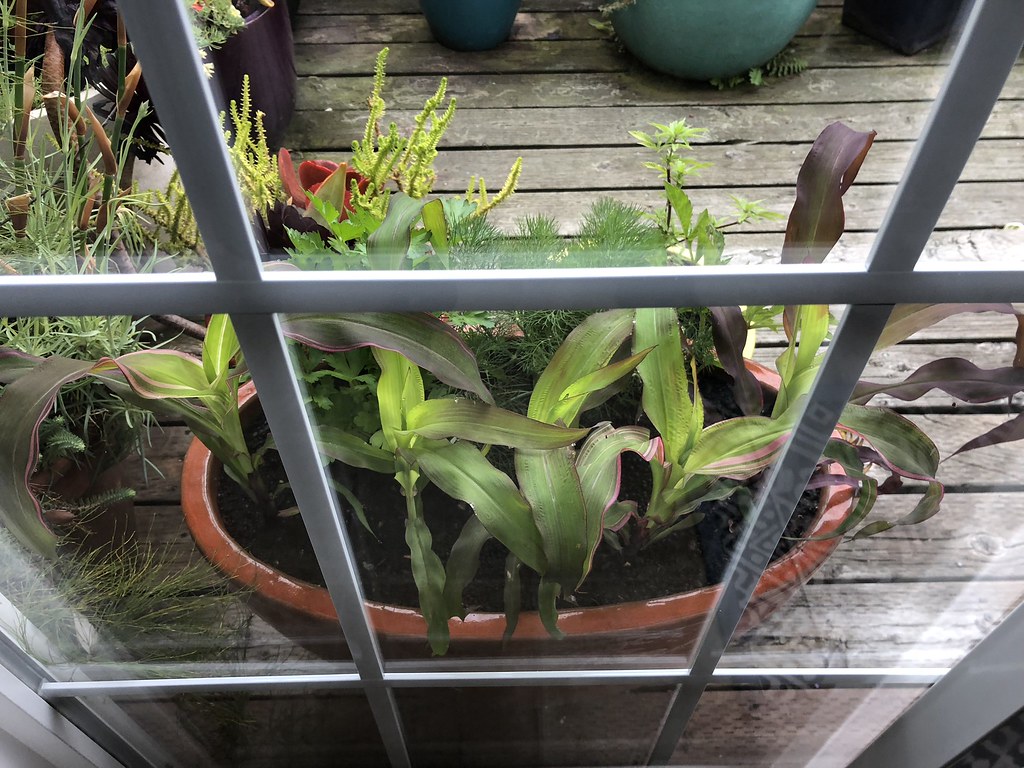
My baby decorative corn, May 18, 2018
So I haven’t talked much about my secret love for decorative corn, but I love it and have been planting it for years. It’s so easy to start from seed, and I’ve even gotten it to produce little ears of red corn shoved in SF containers. The one above is from Botanical Interests and is supposed to get tall. I had no business cramming that many of them in there, but I did anyways. It looks like Klein’s has one that a little shorter.
ZEA MAYS, var. japonica (Ornamental Corn)–Tall annual cereal grass bearing kernels on large ears: widely cultivated in America in many varieties; the principal cereal in Mexico and Central and South America since pre-Columbian times–yes the same species as the corn we eat, but with a showy twist. For full sun. Kernels can be popped.
‘Pink Zebra’–The only dwarf variegated ornamental corn on the market. Gardeners love the dramatic color and texture in their late-season mixed planters and gardens. Green and white striped foliage adds showy purples/red/pinks in cool nights/long days. each stalk produces many small ears with purple kernels and tassels. Grows to 4-5’ tall. (5” pot)
Zinnia fest Half Moon Bay Nursery, June 1, 2018
There is no flower I love more than a zinnia. Every year I’d buy them at Half Moon Bay, or many times even start them from seed and watch them get powdery mildew and suck. The shorty Profusion series would be okay, but I only wanted giant cactus flowered ones and all the benary’s giants. I grew them in Oakland, but it’s too damp in SF. Word is it’s easiest to plant them from seed in WI. Luckily Klein’s has an excellent selection to choose from to get things going early. Why not plant seeds and baby plants at the same time? You always need more zinnia in your life.
Benary’s Giant Series–Thick, 30-36” stems hold 4-6”, fully double blooms. An old variety. Available in purple and a mix of bright colors. (4-pack)
‘Cut & Come Again’ Mix–Long-stemmed flowers 2 1/2″ across in a blend of pink, bright scarlet, yellow, salmon, white and more. The more you cut, the more they bloom, and they keep blooming from midsummer until frost. Heat-loving and very easy to grow. Great for cutting as well as in the garden. Up to 30” tall. (4-pack)
‘Envy’–Envy belongs in every flower arranger’s garden! Its unusual vivid chartreuse color sets off brighter summer flowers with style and pizzazz and harmonizes equally well with soft pastels. 3-3 1/2’ tall. Flowers are semi-double. (3-pack)
Pop Art Series–Large 3” bicolored dappled blooms on 2 1/2-3’ plants. Very eye catching. Available in golden-yellow sprinkled with red. (4-pack)
‘Giant Cactus’ Mix–Add fireworks to bouquets! Stunning cactus-type flower form with layers of narrow, pointed petals. Large 3-4 inch fully double and semi-double blooms. Sturdy upright plants produce an abundance of flowers in orange, red, yellow, pink, salmon and purple. 24-36” tall. (4-pack)
Lilliput Series–A smaller and earlier variety. Button-type flowers come in the usual array of zinnia colors on 18 to 24 inch plants. If deadheaded, bloom is continuous from midsummer to the first frost. Available in a mix. (4-pack)
‘State Fair’ Mix–Large, husky plants with tremendous 6” dahlia-like blooms. The best cut flower zinnia we offer. Excellent color range of lavender, orange, pink, purple, rose and scarlet. Very tolerant to mildew and alternaria. (4-pack)
Swizzle–Interesting novelty series displays big, fully double, bicolor blooms on full, bushy, 10-12” plants. Good for gardens and containers. Available in ‘Cherry & Ivory’ and ‘Scarlet & Yellow. (4-pack)
‘Uproar Rose’–Well-branched plants are covered with large, fully double, deep rose blooms. A perfect cut flower! 24-32” tall. (3-pack)
‘Zowie Yellow Flame’–A 2006 AAS Winner. These bright, bicolor blooms will give you all the drama of a desert sunset. Each 3-4” semi-double bloom contains a scarlet-rose center with yellow petal edges. Plants have a strong bushy habit and make excellent cut flowers. 22-28” tall. (3-pack)
ZINNIA MARYLANDICA: An artificial hybrid between Z. angustifolia and Z. violacea. The Profusion Series was the first of this type to be made available to the public during the 1990’s. Selection may change throughout the season based on availability from outside vendors.
Profusion Series (Z. angustifolia x elegans)–Something totally new in zinnias and one of the most celebrated of garden annuals to come along in years. They produce single, daisy-like flowers 2” wide. Free-flowering all season; no deadheading is needed! Plant in full sun. Adapts well to containers. The most mildew-resistant zinnia available. Height 12-18”. Available in cherry (1999 AAS Winner), apricot, ‘Fire’ (orange-red), orange, red, white and yellow. (4-pack)
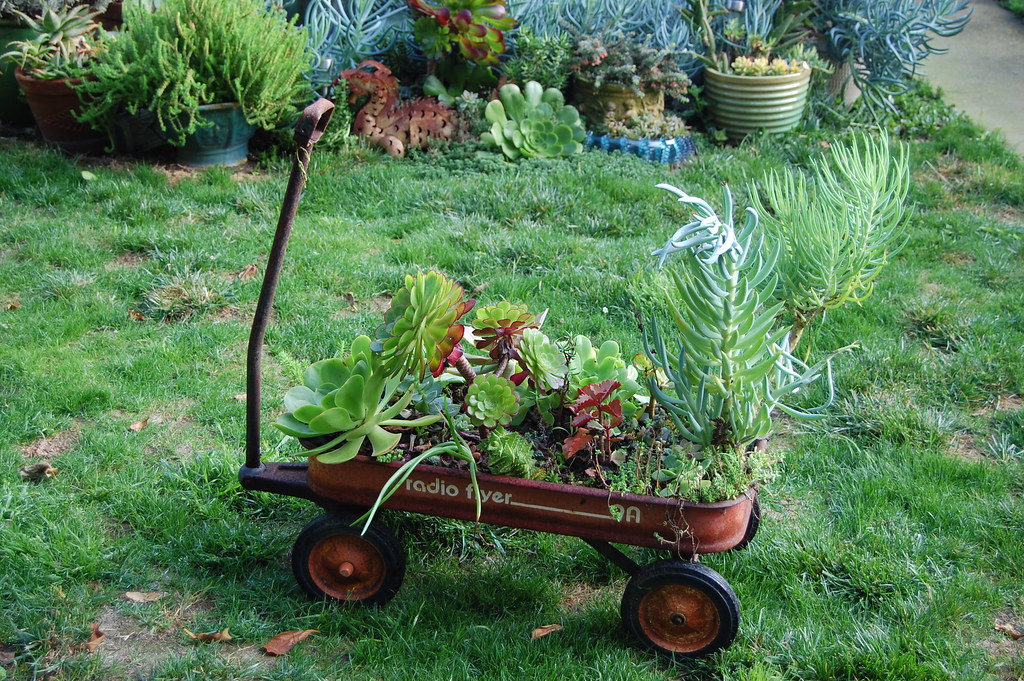
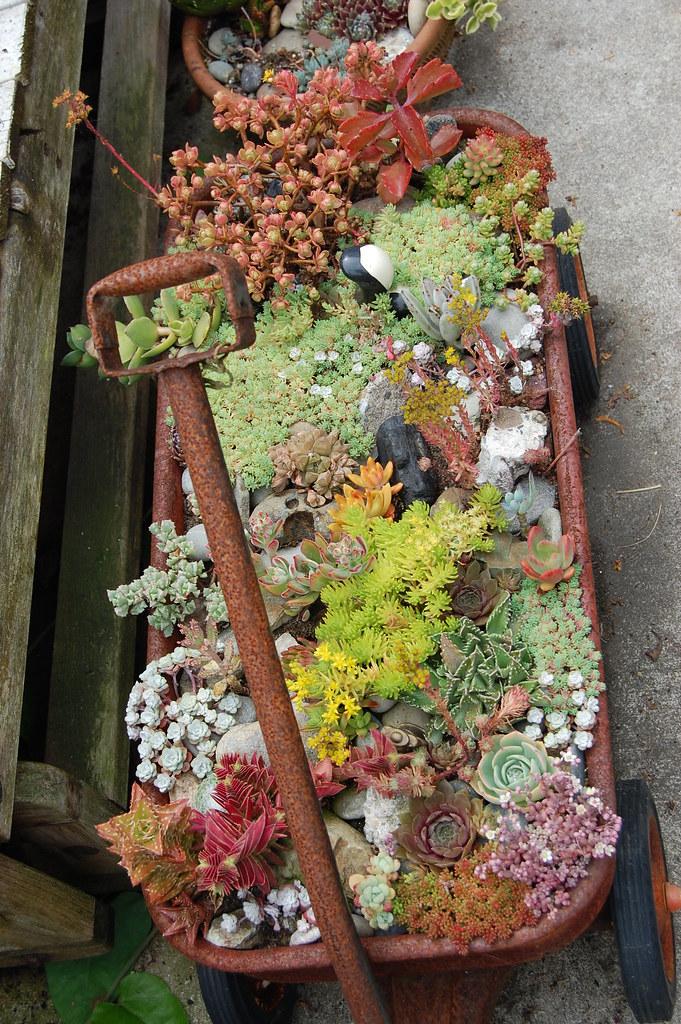
It’s hard to believe it’s been over ten years since I first jammed some extra succulent cuttings in a wagon we snagged at a garage sale for super cheap, or maybe even nabbed it off the street I don’t remember. I’m not going to make you look at the boring picture of it with holes drilled/violently smashed in with a big nail, but all containers need drainage unless you’re growing carnivores. I’ll get in a fight with you if you tell me a layer of gravel at the bottom is the key to drainage success. It won’t help and can often times make situations worse. Looks like we were quite the succulent hoarders back in the day, but if you live in Outer Sunset, SF how can you not be? It’s so easy, you literally have to do nothing to get them to grow and procreate. It’s hard to overwater sand. Please don’t be stealing stuff (taking cuttings) from your neighbors without asking, just ask. They’ll most likely give you way more than you would have snipped anyways.
WTF was I thinking?!?!?! August, 16 2009
Yep, I did this and thought it was great. It’s not like I didn’t have a bunch of cool stuff to choose from, I just sucked at arranging them. Thank goodness I got better at it and accumulated more plants, for a better selection. Here are a few early shots.
Awkward… January 16, 2011
About a year and half later and it looks weird. Not in a good way. It’s not the worst succulent thing I’ve ever seen, but it doesn’t look like anyone put any thought in to it.
Too much junk in the trunk
I think it was jammed in a location where this growth looked more normal, but the poor thing looks pretty lame in the middle of our gopher salad.
Skunk in the trunk, April 2nd, 2011
Remember that first picture? It took me almost two years to figure shit out. I used more small scale succulents, instead of big honking ones. I also utilized some of the rocks Matti would bring home from beach walks with Max to hold the plants in place and look nice while the plants grew in.
Faucaria up front, April 2nd, 2011 Top view April 2nd, 2011
Chilling in front of the grill, May 8, 2011
You can read about making your own succulent grill here.
Filling in nicely, May 22, 2011
Filling in nicely, May 22, 2011
Not too bad, considering it was only planted about two months ago. Another reason why using small scale stuff can be more rewarding.
August 21, 2011
Still looking good amongst our weird garden stuff of yesteryear. The wagon was later relocated to my aunt’s place in Alameda when we moved back to Wisconsin and was given a face lift or two over the years by my plant nerd cousin. Most succulent containers no matter how well planned out in advance need a little reorganizing every now and then to keep looking fresh.
Zoe in Damon’s special Sarracenia collection. May 21, 2017
We got the email that California Carnivores is shutting the doors to the public. It was twenty minutes after I discovered they have a newish TikTok account, which lessened the blow. They also have a YouTube channel with all kinds of excellent info about making your own bog garden and growing all kinds of carnies, plus there’s a ton of info about growing carnies on their website. They will continue to sell plants online as well. Damon and Peter deserve to be able to take weekends off, owning and running a nursery is not easy. I’m so happy we’ve been able to visit so many times over the years. Above is one of my all time favorite pictures of Zoe I’ve ever taken (it’s still my phone screen background) from Damon’s special collection area.
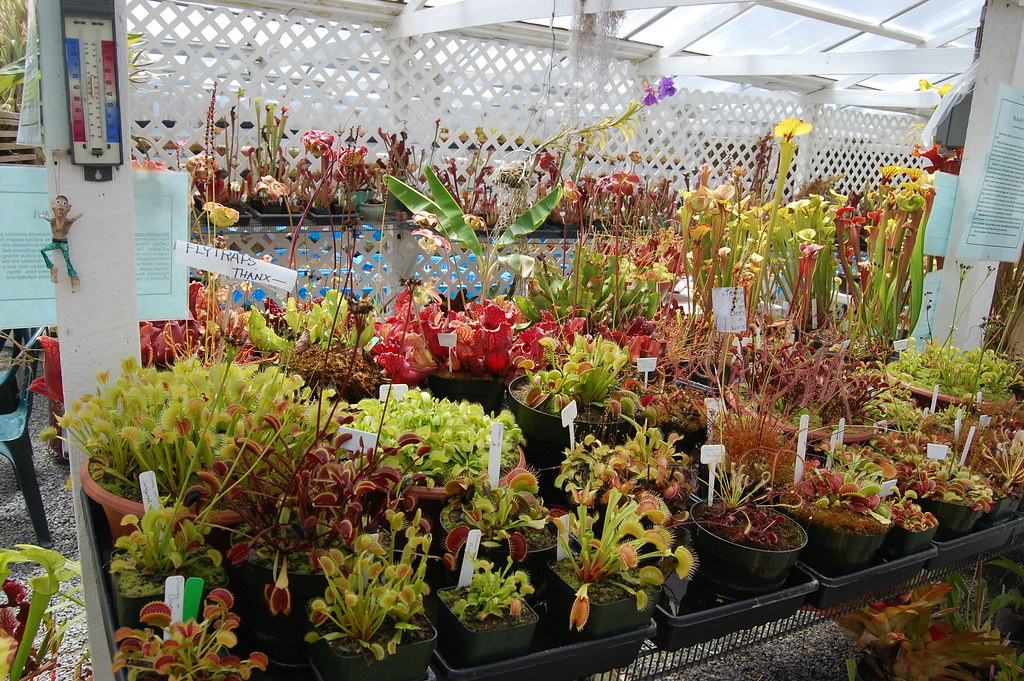
Flytrapville, June 26, 2010
I think the first time we made the trip to CC was in 2010 based on photographic evidence. We own not one, but TWO Conservatory of Flowers huge Chomp posters from their fabulous shows and I think we first heard about the nursery through the show there. When we first moved to SF we would look for free plants on craigslist. Someone was offering up pitcher plant root balls, so we picked them up from their porch in a little plastic baggie of sphagnum moss and I grew my first Sarracenias. It kind of felt like a drug deal, and Matti thought I was crazy. Here are a bunch of my favorite pics from the nursery over the years.
May 21, 2017
Sarracenia blooms, March 2, 2019
March 2, 2019
Butterworts (Pinguicula) Wreath, March 2nd, 2019
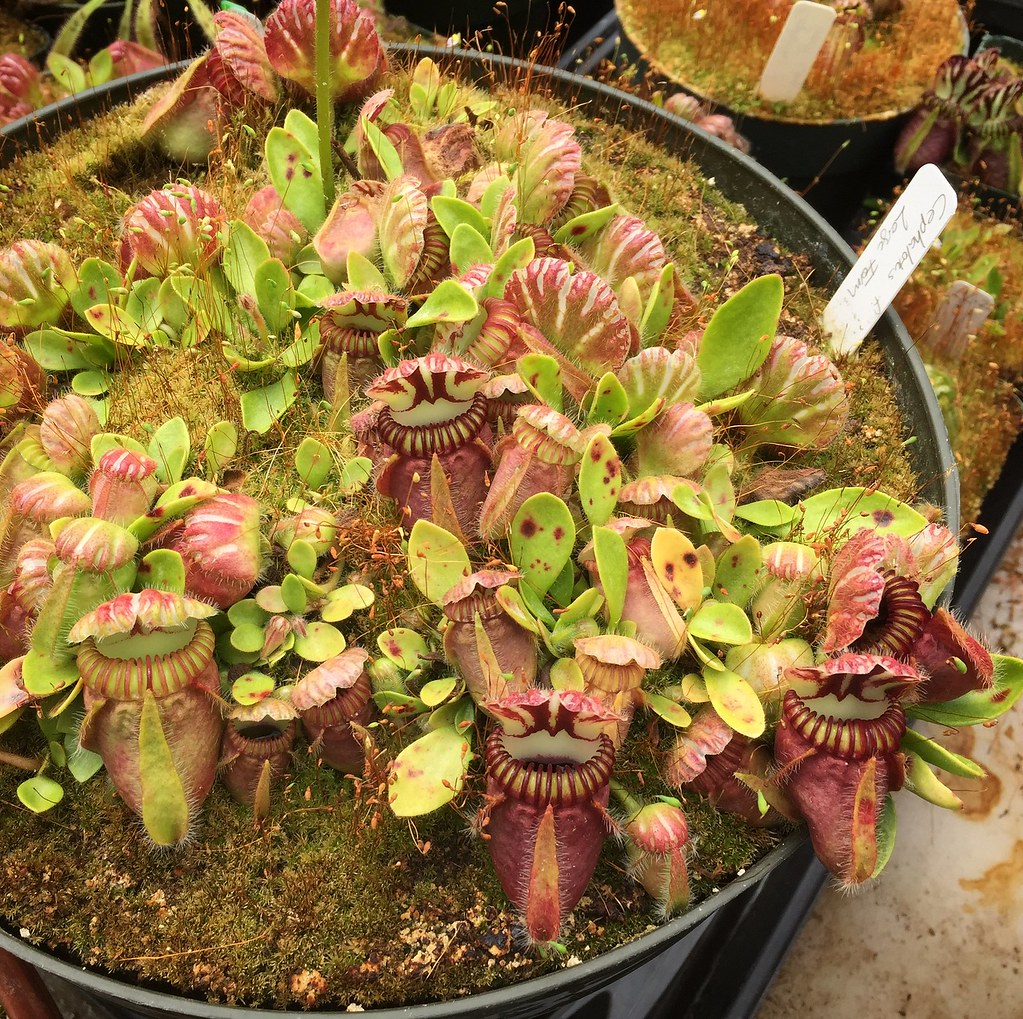
Cobra Plants, Darlingtonia californica June 26, 2010Albany Pitcher Plant, Cephalotus follicularis May 21, 2017Staghorn fern and Bromeliad party, May 21, 2017Nepenthes and Tillandsias, March 2, 2019Zoe and a giant Nepenthes, March 2, 2019Zoe and a giant Nepenthes, November 20, 2016
Nepenthes sanguinea, May 31, 2011
This will always be my favorite carnie I’ve ever grown. I’m pretty sure it was purchased on our first visit to California Carnivores in 2010. One day a large colony of ants crawled in to one of its first pitchers, they all drowned in the pitcher and the plant got HUGE.
Zoe and fly trap costume, October 31, 2018
The venus fly trap costume I found at the Bayview Goodwill for $8 in September 2015. It’s one of my best thrifting scores over the years of finding cool stuff.
Hairy desert sunflower, Geraea canescens March 25, 2019
After we hit up the wildflowers at Lake Elsinore we headed to Borrego Springs, CA for the first time to check out the desert blooms. Our first big bloom sighting in Anza-Borrego Desert State Park was this amazing span of desert sunflowers. This is embarrassing, but I almost wrote an entire blog post about the wrong plant. Something didn’t seem right. I’m usually pretty darn good at figuring out what a plant is with a little google help, but I almost told you this is Encelia farinosa, when it is clearly Geraea canescens or hairy desert sunflower. I used the photo location feature on Flickr to figure out exactly where these were taken and it’s Henderson Valley Road where desert sunflowers go crazy every spring if there’s enough winter rain. I’m surprised they didn’t name this one Hairy old man desert sunflower based on the genus name Gerarea referring to an old dude in Greek.
Geraea canescens March 25, 2019
I feel a little less embarrassed after reading that a bunch of the flowers in the aster family, desert wildflower crew look similar according to other folks. The thing that sets the desert sunflower apart is that it typically has branched flowers along with thick, hairy leaves.
Geraea canescens & Chlosyne californica March 25, 2019
Thanks to Calscape’s awesome native plant website I was able to figure out that this is a California Patch butterfly. Maybe if I didn’t wait over two years to post about something the plant names would be a little fresher in my head. The state park hands out maps and tells you where all the good spots to check out the flowers if I remember correctly. After witnessing the wildflower trample fest in Lake Elsinore and Lancaster it was refreshing to see flowers in a less crowded spot, especially during Spring Break. We had reservations to go back for Zoe’s 2020 Spring Break, but Covid happened.
Geraea canescens March 25, 2019
It’s really hard to get me to pose for a photograph, but there are a couple pictures of me in desert sunflower heaven. I’d also like to ask that if anyone has seen the grey t-shirt with pigeons on the front that I’m wearing it’s been lost since Zoe and I went to Wisconsin two years ago and I miss it.
Geraea canescens March 25, 2019 Geraea canescens March 25, 2019
We took turns keeping Max company next to the car, so he didn’t trample the flowers or cook in the minivan. This was his last long road trip. He was so old and deaf that we could finally take him to outdoor restaurants without worrying about him freaking out on someone. He was always great off leash, but on he could be sketchy on. Heck, Zoe could even walk him his last two or three years. Stay tuned for more desert posts.
One of the best spots to see mass quantities of California poppies (Eschscholtzia californica)) every spring is Antelope Valley Poppy Reserve near Lancaster in Southern California. Sometimes nature/timing does not cooperate though. Poppies can be little jerks and decide it’s not sunny/early enough in the day to be open in a giant orange mass if they don’t feel like it. It was pretty cloudy out despite the bits of blue sky you see here.
Fiddlenecks (Amsinckia) in the front, March 23, 2019
This is the picture you post on Instagram that makes it look like the poppies are open and amazing. It also gives the illusion that there aren’t 100’s of other people there all trying to take pictures and being obnoxious. Folks were going off the trail all over the place, trampling and picking flowers despite the giant warning signs all over the place. It was still cool to see the orange hillsides, even if it was super cold, people filled and windy. Luckily we saw some great poppy action in Lake Elsinore the next day and many more blooms in the desert.
March 23, 2019
You may want to check out the live Poppy Cam before heading out as the blooms are different every year depending on how much rain falls in the winter. I took a quick peek back in mid-March and it was nothing but brown hillsides. California poppies are easy to grow and easiest to direct seed as they don’t like to be transplanted. They’re great for filling little cracks where nothing else will grow. I’ve even seen them looking happy in Wisconsin. Select Seeds has a ton of poppy options to choose from including doubles, but my favorite is ‘Mikado‘. Check out my successful poppy experiment in Oakland for even more California poppy fun.



































 Far Out Flora