Crested Succulents

Originally posted: November 28, 2011

We’re starting to get a sweet collection of cresting succulents these days. Check out this Graptoveria ‘Fred Ives’. Good color and adds a lot of punch amongst the green and gray succulents. Parents of this cultivar are Graptopetalum paraguayense and Echeveria gibbiflora. Crazy how some plants can cross breed between genera.

Graptoveria ‘Fred Ives’
Graptopetalum paraguayense

I think this was the first cresting succulent that we had in our garden. Back in the day, we picked up some cuttings from a buddy. Turned out that a couple of them started to crest. We’re not exactly sure how, why or when cresting happens, but wikipedia gives a good description of the weird growth. Seems that the growing point starts to go a little funky where the single growing point turns into a growing line or plane. Then the plant may form a crest or fan shape. It’s not limited to just succulents, but can occur on a variety of other plants. Yesterday, we noticed that one of our Euphorbia flowers is starting to crest. Strange.

Echeveria ‘Doris Taylor’

Here’s a cresting Echeveria ‘Doris Taylor’ which we added to our collection a couple of months ago. Sometimes known as the Woolly Rose, parents are thought to be Echeveria setosa and Echeveria pulvinata. It has hairy leaves and normally grows in a rosette.

Aeonium ‘Sunburst’

Aeonium ‘Sunburst’ getting weird.You can really see the flat stem here caused from the growing point happening over a line. 

Update November 2019: We spotted this crazy big Euphorbia going cresty crazy up in Mendocino.

Australian Astroturf: We Love & Kinda Hate You

Originally posted: September 27, 2011
Update: I think we’ve killed it a couple more times in different parts of the bay area since this post. 

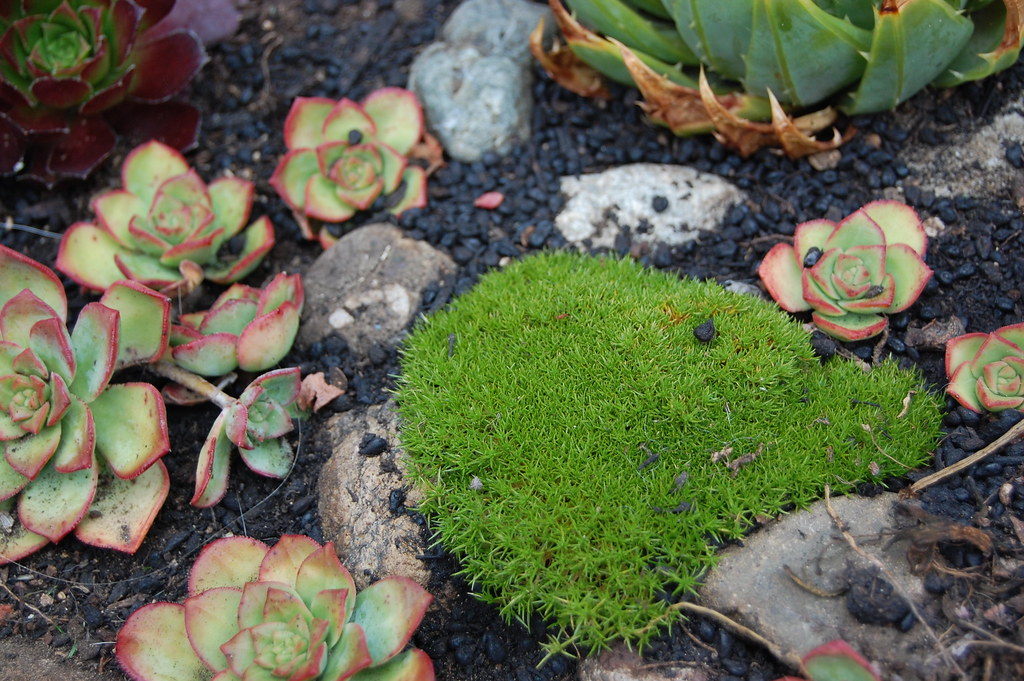
What’s the deal Scleranthus biflorus? We’ve tried to grow this a couple of times & have killed it every single time in a container & in the ground. After murdering so many of these in the past I was hesitant to bring one home again, but we had an opening on the sunny side of the garden. They have seemed to hate part shade & regular water from our previous experiments (I think Matti thought it needed a lot of water & gave it extra). This time around I split it up in to two chunks. This one above is right next to the sidewalk that gets a quick hose down once a week & is doing A-okay with its new Aeonium friends.

So about four feet away, maybe even three I stuck this unhappy camper in the ground (same as happy camper above). Notice the drip line just sticking out like a sore thumb a couple inches away? That’s the only difference between the two. A little bit of water drips out once a week for about 30-45 minutes. 

Driftwood King and Kid

It’s hard to believe we first blogged about driftwood back in September of 2011. We just got back from a trip to Mendocino, so we’ve added a few new pics to the old post including our driftwood kid. 

Mendocino rocks in so many ways, but its creative uses of driftwood push it over the edge to being super awesome. We love driftwood. When you live next to the beach you can get away with any sort of driftwood sculpture. Does anyone else see two scantily clad dancers frolicking on the right hand side of this picture?

Matti and Zoe with the big driftwood bear in 2019. We didn’t spot the horse this trip. 

It’s a super cool gigantoid driftwood horse in front of the Mendocino Art Center! There were lots of cool, reasonably priced sculptures everywhere in the cute garden.

 A dreamy driftwood arch in Mendocino. 

When you live next to the ocean why not go crazy with driftwood? I’ve always wondered about the legalities of taking driftwood from California beaches, and after doing a wee bit of googling it looks like each place is unique. Quite a few places seem to encourage it. I even saw a post about getting a permit for carrying away as much as
possible from a state park. 

The Aloes are starting to put on their winter show and the aeoniums are waking up. Love the big chunk of driftwood.

Zoe and the driftwood castle at Navarro Beach near Albion. 

Fort Funston’s Wildflower Freakout

Dudleya farinosa

Originally posted: July 8, 2011

Last Sunday morning Matti, Max and I hit up Fort Funston about four miles south of our place for some wildflower hunting. 

Dudleya farinosa

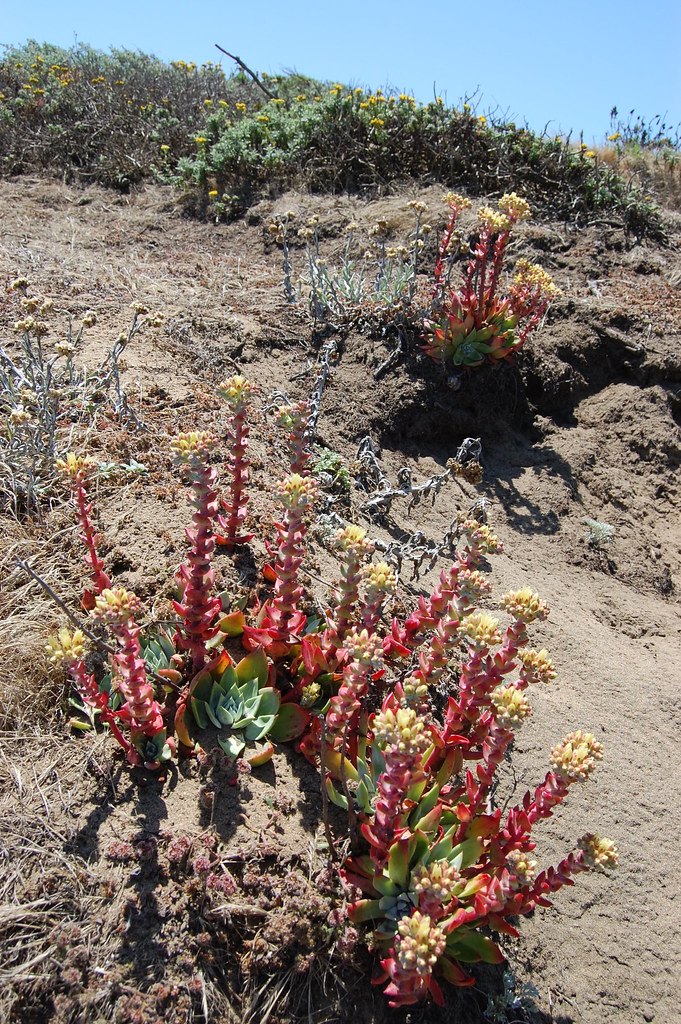
This is why we really came to Fort Funston. It’s Dudleya flowering season which means you can actually find them via their red stems and flowers all over the place. Sweet! Pretty sure these are all Dudleya farinosa. We saw some less frosty green guys, too.

Abronia latifolia

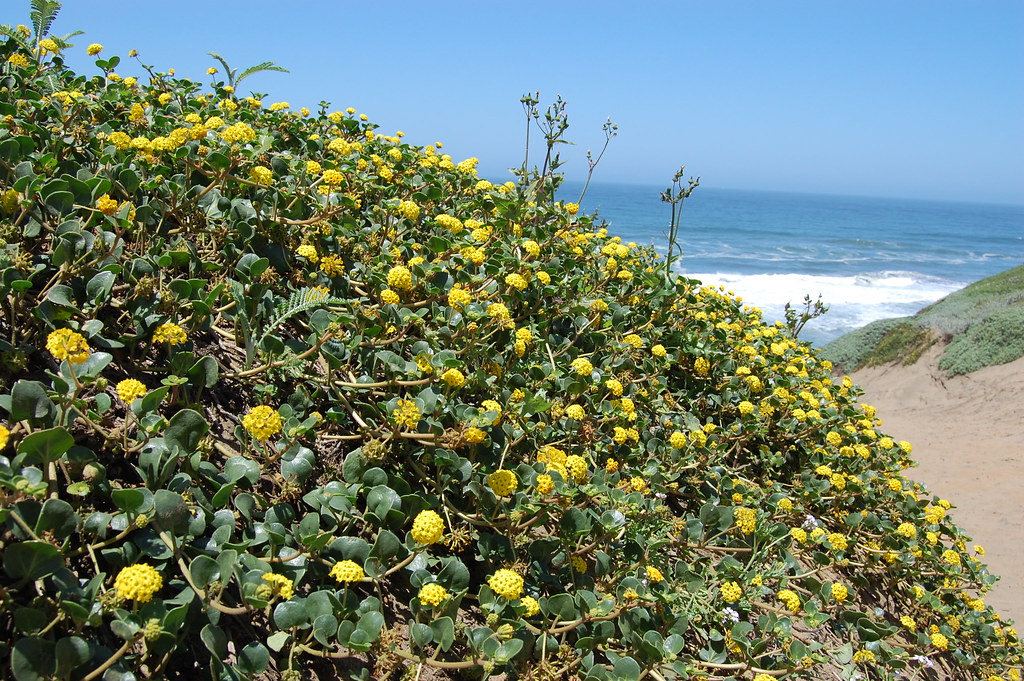
The above clump of round yellow blooms is Abronia latifolia, or Sand Verbena. It’s very succulenty. According to Las Pilitas Nursery it likes to be really, really close to the beach, like a couple hundred feet from the surf close. It’s also the sole food source for the almost endangered Copablepharon fuscum or Sand Verbena moth.

Cirsium occidentale
Coast Paintbrush – Castilleja affinis
Erigeron glaucus
 Pretty plants
Dudleya farinosa
Artemisia californica
Camissonia cheiranthifolia
Max the Border Collie

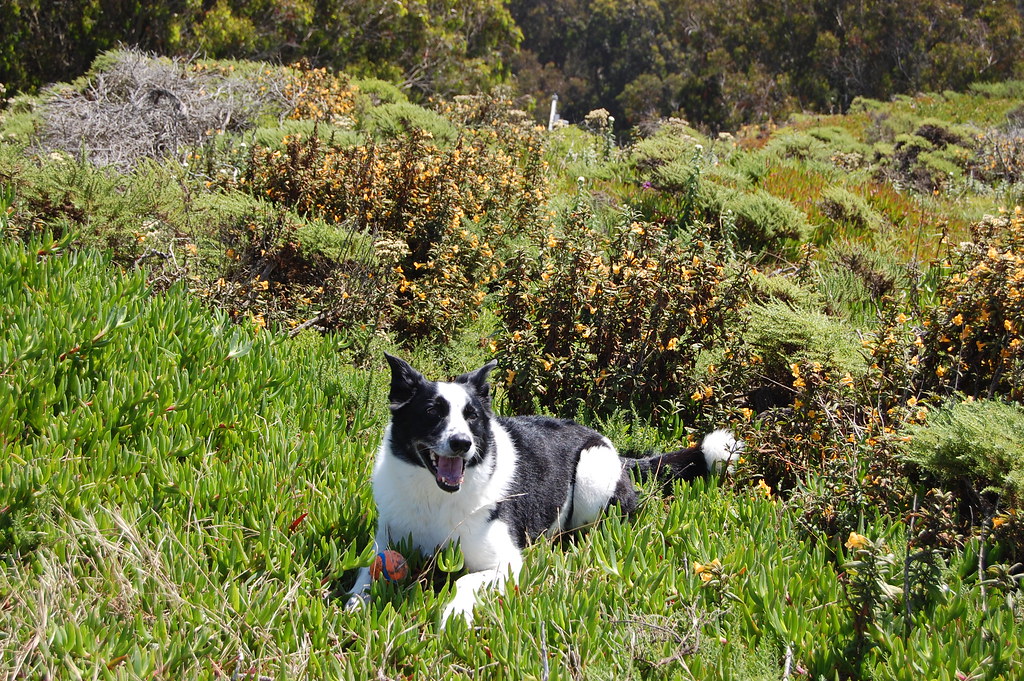
Fort Funston’s still full of tons of beachy blooms. It’s chock full of Eriogonums in all shapes and sizes, and oh yeah it’s also an off-leash dog park so bring the puppy. You can check out all our Fort Funston pics are here, including many of Matti looking super excited.

DIY Succulent Pallet Table

One of our most popular posts from June 2011.

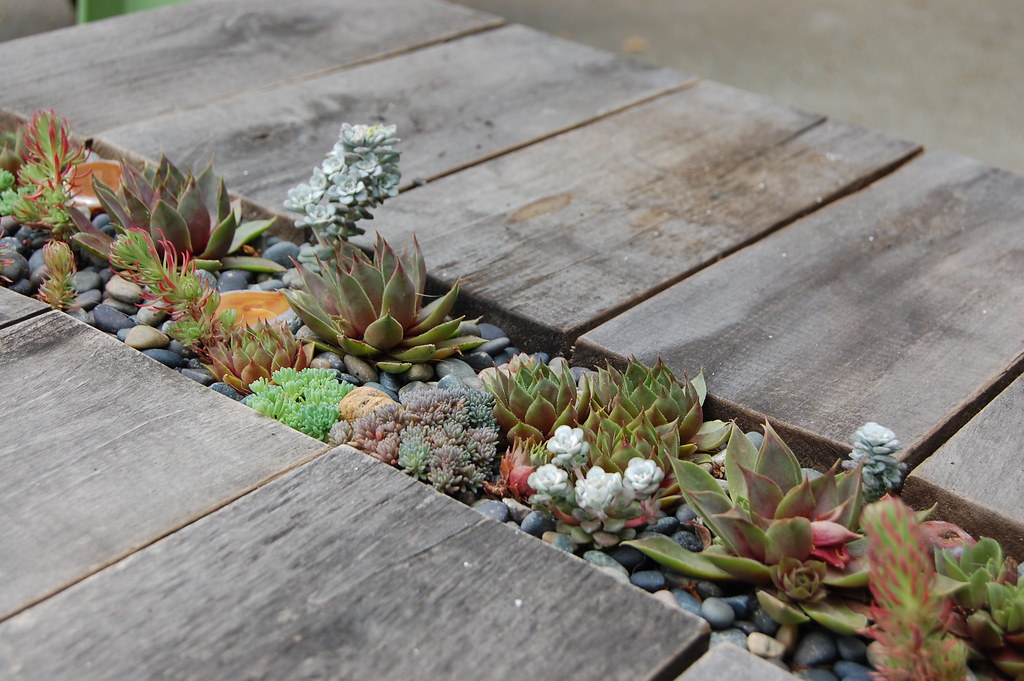
Can you believe that our latest DIY project was once just a couple of junky pallets and some scrappy table legs?  Crazy…if I didn’t have photos, I wouldn’t believe it myself.  Not too long ago, we whipped out a coffee table sized succulent table out of an old shipping crate. Now we scaled it up.

Max with the Succulent Table.
The pallets.

First bit of advice, deconstructing pallets are a big pain unless you have the right tools…and our hammer and wall scrapper wasn’t quite doing the trick.  Boards were cracking and splitting left and right.  Good news.  We had three pallets to figure out how to do it, and by the second one…we were getting usable boards.

Couple good planks.

Love the scars of time left on these chunks of pallet wood.

Attaching the legs.

After pulling apart two pallets, we used the 2 x 4 sized boards to make a rectangular frame to attach the appropriated table legs.  Debate went back and forth whether or not to strip the paint off the legs…we’re not huge fans of washed out creamy yellow.  We ended up just leaving them dinged up how we found them.  In the end, it worked in our favor.

Dry run for fittings.

Like TV magic (and 2 days later), the table was more or less put together.  We got so into the project that we forgot to take some pics during the building of the succulent hole, oops. Basically the top is made up in three sections. Two flat boards make the right side, three boards make the left. The center three boards were built as a separate planting box…again all using parts of the pallet. We made it this way because we knew the succulent table was going to journey about 45 minutes south to Sunset Test Garden.  The plan was to make the succulent section removable so that it could ride inside the car while the rest of the table may need to be strapped to the roof of the Subaru.

Getting messy.

3/8 inch holes where drilled in the bottom, and we decided to go with a fast draining cactus mix. The bulk of the plants are Sempervivum, Sedum, and a hint of Orostachys iwarenge. We plugged in some pea sized pebbles to stabilize and dress up the top.

Packing them in.

Yeah, we didn’t hold back on jamming them.  By all means, it would be fine to plant the strip thin and let it grow in.  But when you need it to look full fast…you just hold, tuck and stick until it looks more or less done.

Finishing touches.

Here you can get a sense of how the center box is separate from the rest of the table…great for traveling.

Ready for action.

Speaking of journeys, this guy was on view at the Sunset Magazine Celebration Weekend in the Test Garden down in Menlo Park, CA back in 2011 where it was photographed and for the magazine and Western Gardener. We still have it in our backyard today. 

The OG Succulent Table

Mission DIY succulent table complete.  I’ve wanted to make this baby for months.  It’s a dissected old shipping crate and some other random scraps of wood lying around the house turned into a patio side table with a planting strip down the middle.

The next couple of pics show a bit of the process.  The was a shipping container for artwork which I nabbed from work before they tossed it into the dumpster.  Love the 3 Rs…reduce, reuse, recycle.  I like these shallow crates…this guy was about 20 x 28 x 5 inches.  Lots of screws on the opening end, but the other side had a ton of nails.  Nothing a make shift crowbar couldn’t handle (aka a big screw driver).

The outside walls were about the same shape as I wanted the table, and I started to build everything around that size.  Basically, I was making it up the design plans the whole time I was constructing this table.  In the middle, the lighter colored wood (scrap), is the place where I am going to plant the succulent garden strip.

Randomly walking around looking at gardens in the hood, I spotted a big pile of old scrap lumber.  I don’t know what these old scrap pieces of wood were used for originally…they were all in different lengths ranging 12-18 inches.  But I thought they would make a nice rustic look for the table top.  Score!  Great thing was they were all the same thickness.  I took the smallest one, and cut the rest down to match.  In case you missed it, look up on images, you can see that I fasten all these small boards for the table top from the bottom side with some thin piece of wood.

I really tried to screw everything in so that the screws were hidden from sight.  However, I figure the legs needed extra attention, aka 3 inch screws, they are visible.  Those red legs by the way are from our old picnic table that once lived in the middle of our yard.

 …and it passes the Matti’s strength test.  Although, my buddy Jim pointed out that Max the Border Collie wasn’t so certain it would succeed.

DIY magic. But wait, the fun part. Planting in succulents.  We drilled a couple holes in the bottom, covered them with screen and added soil. Megan and I took a bunch of little succulent cuttings to plant. We tried to stay with those that grow on the shorter side.  BTW, you can see more of the table and garden pics (that weekend) on our Flickr.

Grilling Up Succulents

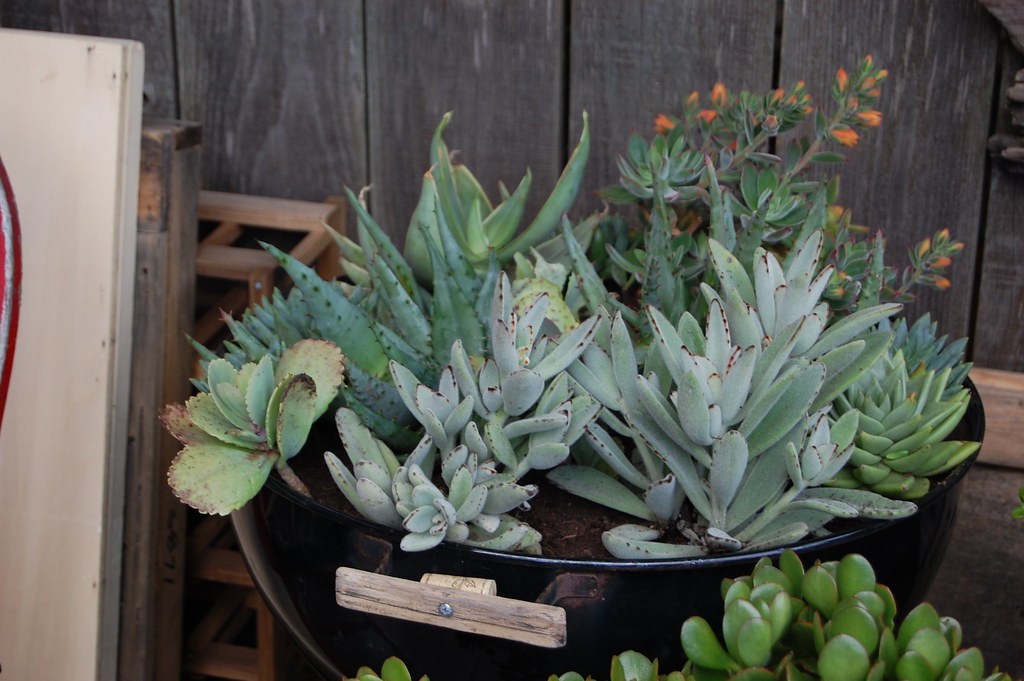
Oh the humanity! I’ve been feeling kind of bad about these guys for awhile now. They look so sad all jammed in that shallow little box. They don’t get a lot of sun these days either, since they’re on the winter shade side of the patio. We had a non-functional Weber grill out back, so…

Max is really proud of it. Not all of the plants in the box made it to the grill. A lucky passer by picked up a big box of Sedum rubrotinctum within minutes of me putting it on the curb. I really jammed them in, but that just means I’ll have to rearrange again in six months. It’s a big step up from the torture box. We used screen to keep the dirt from falling out the holes on the bottom, and threw some gravel in the bottom for drainage.

Here it is in its new home behind Matti’s jade tree.  It’s going to get hit with crap falling on it from our neighbor’s crapilious Myoporum laetum tree, which can sometimes piss off certain plants, but it mostly just pisses us off. Matti replaced the half rotting handle with a wine cork and handle from the top of the grill. He cleaned it up too. 

Countless Cacti

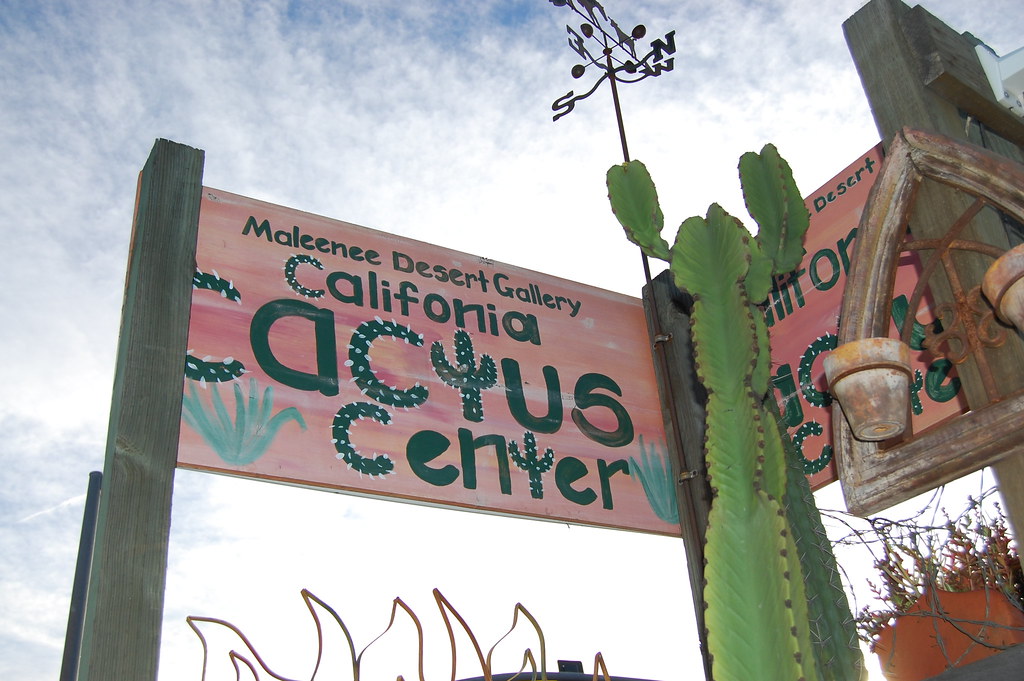
California Cactus Center

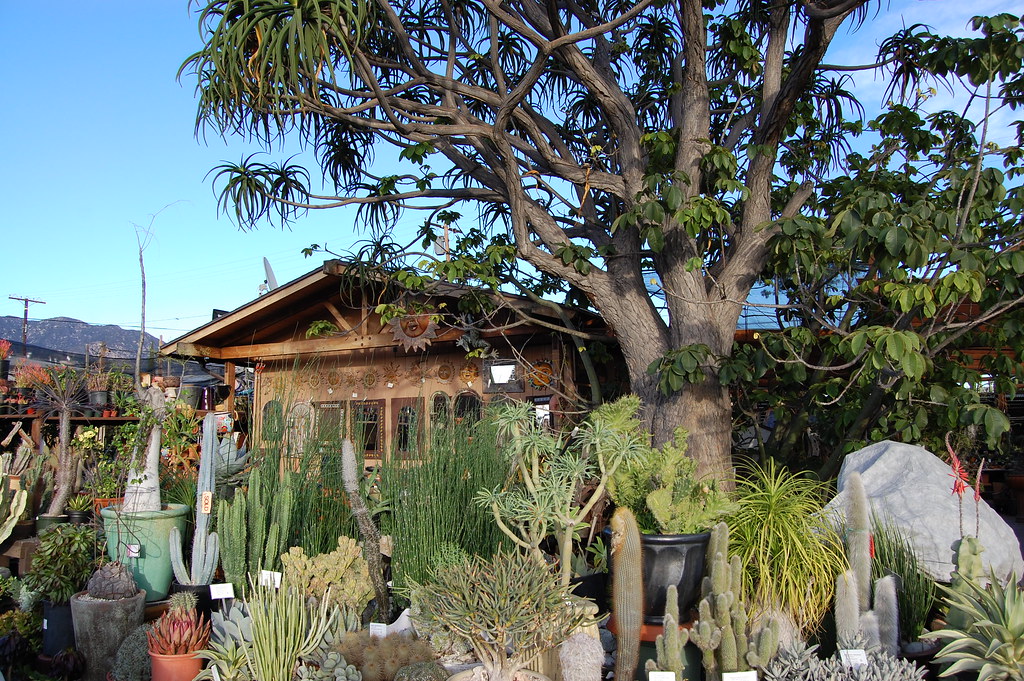
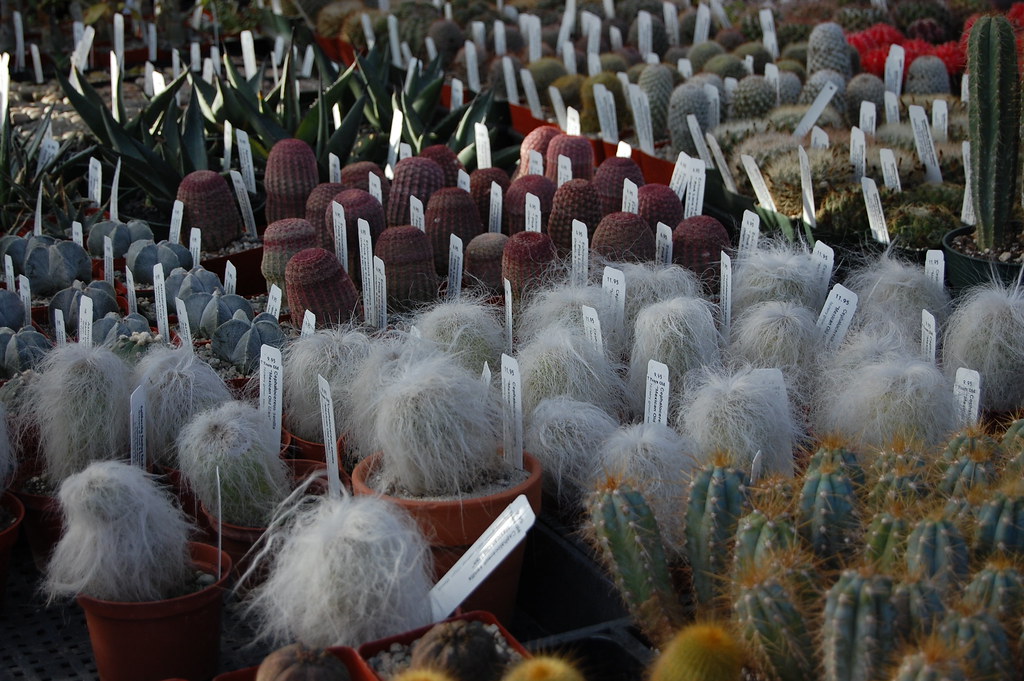
California Cactus Center was on our list of places to check out.  Glad we did.  They have some cool skool specimens hanging out…and for sale.

Crazy amount of Cacti.

I’d be the first to admit…we really don’t have a lot of cactus in our garden, and wasn’t sure we had any.  But every time we do a big succulent pruning, we keep finding cacti underneath our faster growing plants.  Every time… “For Real?  …how long has that cactus been growing underneath there”.  We’ve all had those moments.

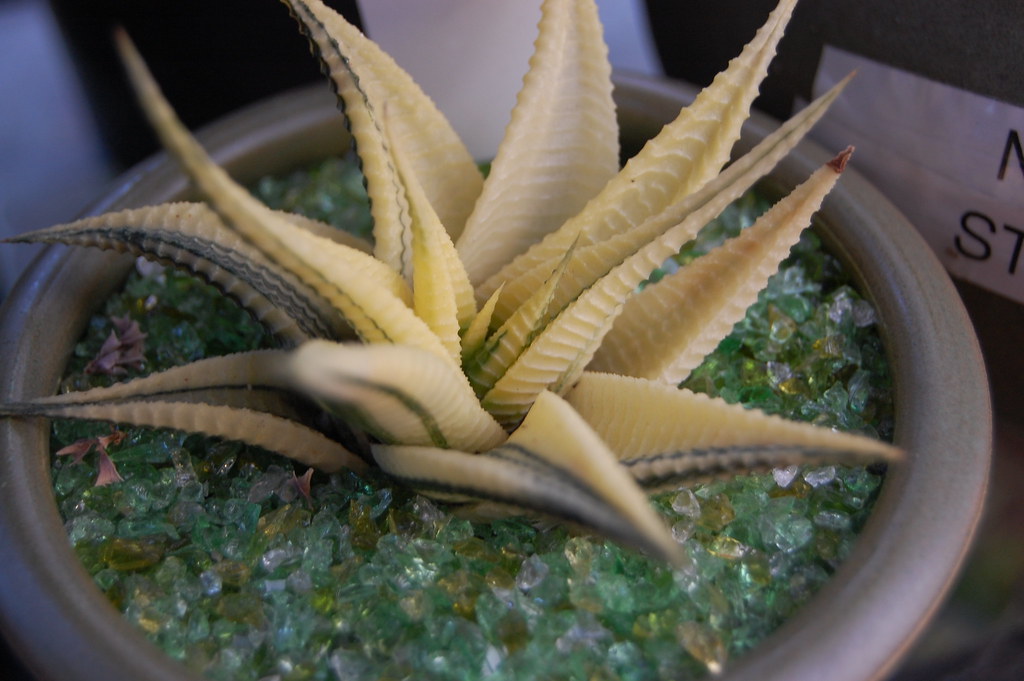
Haworthia limifolia

Here are some of the younger plants that fit into the ultra awesome category.  We don’t recall a label on this guy, but looks like some sort of variegated Haworthia limifolia.

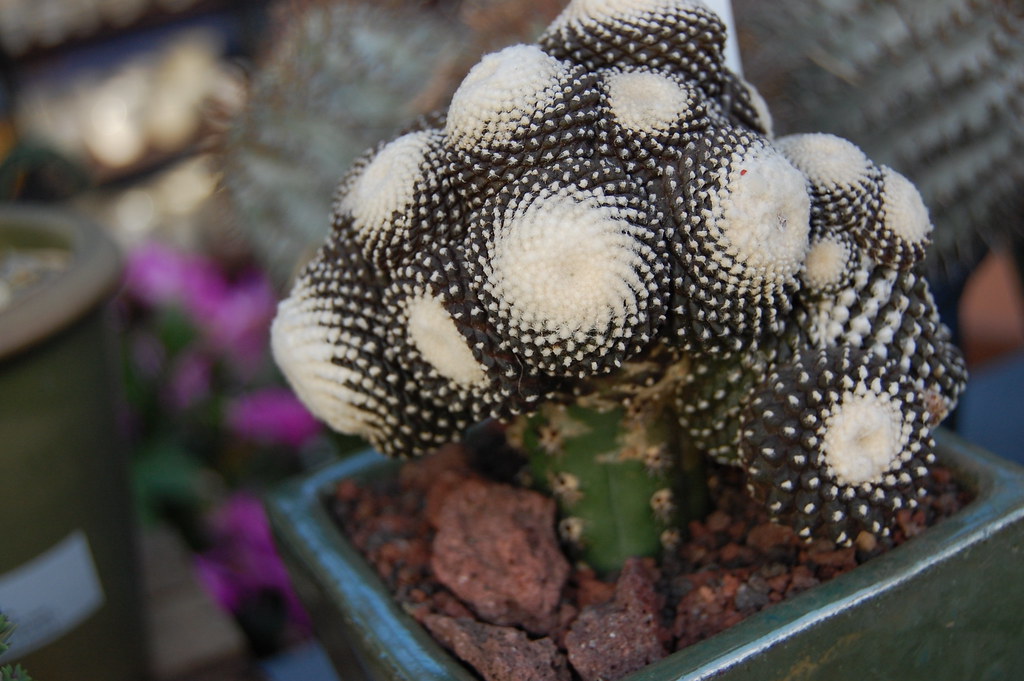
Copiapoa tenuissima monstrose

Maybe it’s my sweet tooth talking but Copiapoa tenuissima forma mostruosa looks good enough to eat.  It has a dark purplish-black body with white hairy bits at the ends.  I heard it gets a brilliant yellow flower too when it blooms.

Haworthia cymbiformis ‘Variegata’

You could almost see right through the leave tips of this specimen.  Really, the whole plant was near transparent.  Man, it was like keeping bacon away from the dog not to take this Haworthia cymbiformis ‘Variegata’ home with us.

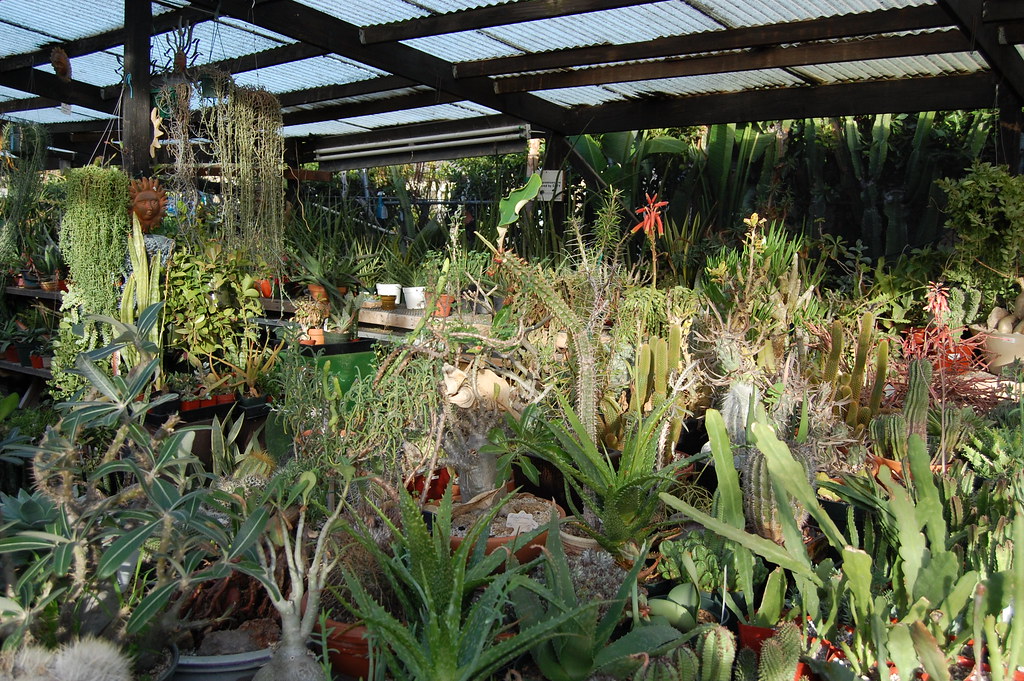
Lots o Plants.
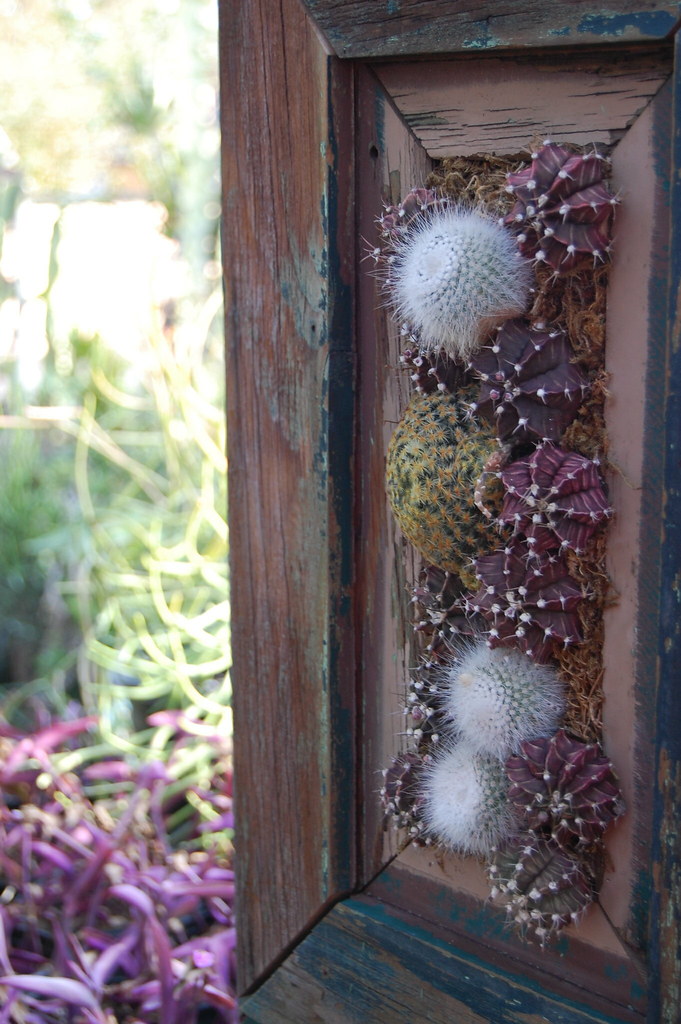
Vertical planter.

The CA Cactus Center does pack it in tight.  Here’s a new take on the vertical (fill in the plant name) garden.  Great work picking out some rustic frame.

Maleenee Desert Gallery, California Cactus Center – Pasadena, CA

Being only a short 10 minutes away from Huntington Gardens, it was a no brainer to stop here.  BTW, there’s a great (ahhhh…well at least accessible) off-leash dog park in the neighborhood.

Holy Crap, Huntington Gardens!

Lots of Lithops

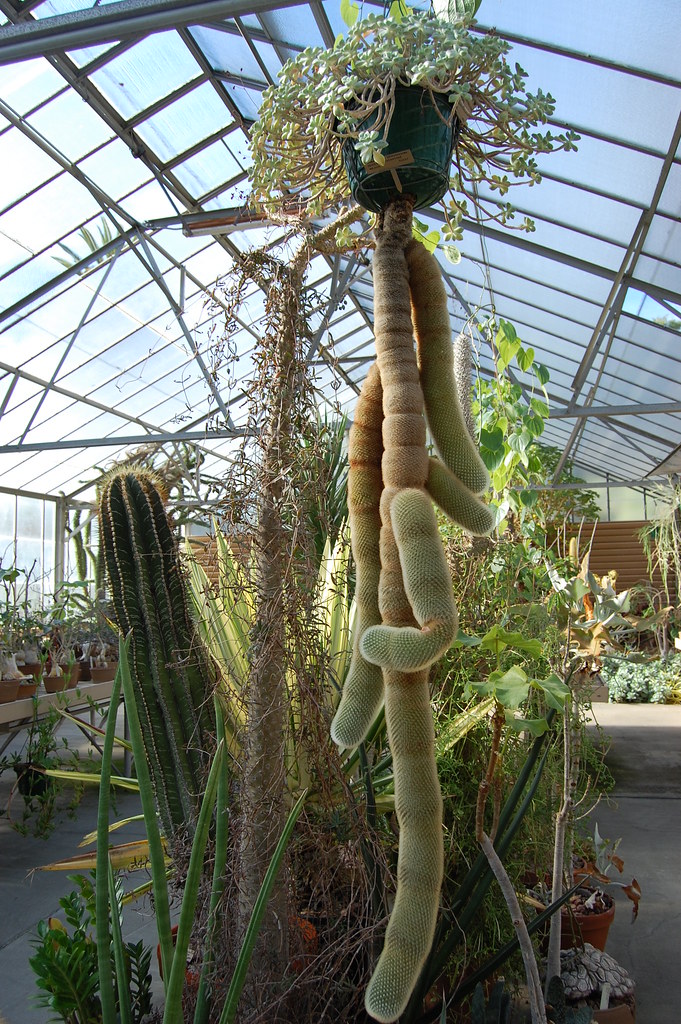
I’m not quite sure how to put our visit to The Huntington Botanical Gardens in to words. Amazing. Really amazing. Hands down the coolest horticultural experience I’ve ever had. Matti said I was in a daze for the first hour. Never have I seen so many cacti and succulents in one place. According to the website, they have 5,000 species of succulents and desert plants. They have 200 of the world’s 300 species of aloes. They’re old too! Some of them are really old. We started our visit at the Desert Garden Conservatory, where they keep their “vulnerable” plants like these Lithops. They look like cute little, succulent butts.

Hmm… I’ve been googling around a little, and I think the above is Alluaudia montagnacii. I’m not sure though. The only info I had was that it was in the Dideraceae family, which turns out only has four genera and eleven species (according to wikipedia). I do know that it’s from Madagascar and weird.

Gymnocalycium, Copiapoa and friends

I don’t really know too much about these guys except that they’re spiky. There are tables and tables filled with spiky plants.

Mammillaria spinosissima ssp. pilcayensis

This guy kind of looks like a hand with a really long middle finger, but mammilla is latin for nipple. It’s native to the Pilcaya Mountains of Guerrero, Mexico.

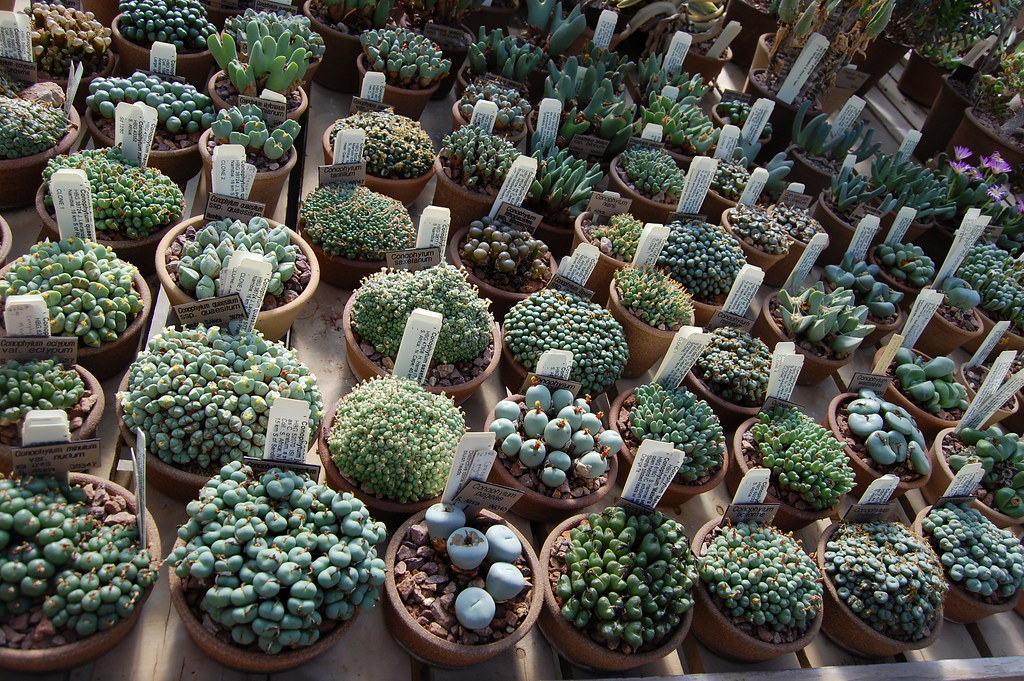
Conophytum cuteness

Here’s what wikipedia has to say about these guys, “Conophytum is a genus of South African and Namibian succulent plants that belong to the Aizoaceae family. The name is derived from the Latin “conus” (cone) and Greek “phytum” (plant). The plants are also known as knopies (buttons), waterblasies (water blisters), sphaeroids, conos, cone plants, dumplings, or button plants.” I kind of want some. They’re winter rain growers, so maybe they could live outside here in SF. If you REALLY want to get to know Conophytums, you can buy the bible, The Genus Conophytum: A Conograph used for $234.52 on Amazon.

Kalanchoe tomentosa ‘Fuzzy Wuzzy’

Kalanchoe tomentosa on cuddly steroids. We’ll be blogging about all the amazing outdoor gardens at Huntington soon. If you want to check out all 233 pictures we took click here.

SF Succulent Society Sale and Show

Euphorbia inermis var. huttoniae

If you want to see the craziest succulents in the Bay Area the SF Succulent Society goes all out every June. These pics are of some of the weirdo entries in the show. Gotta love all those strange Euphorbias. 

Mystery Euphorbia
Euphorbia aeruginosa
Echeveria shaviana
Haworthia limifolia
Ledebouria socialis minima
Anacampseros marlothii