It’s that magical time of the year when all the giant clumps of Aloe arborescens are full of flowers. Go to the SF Botanical Garden now to see all this awesomeness.
Cool coral blooms Aloe arborenscens
I’ve always liked the corally colored guy in the upper succulent garden. The entire garden is looking pretty great right now
Zoe and the Aloes
You may not know this, but we gave our child the middle name Aloe. We like them a lot. Here are a few more reasons you should get over to the garden for the aloe fun fest:
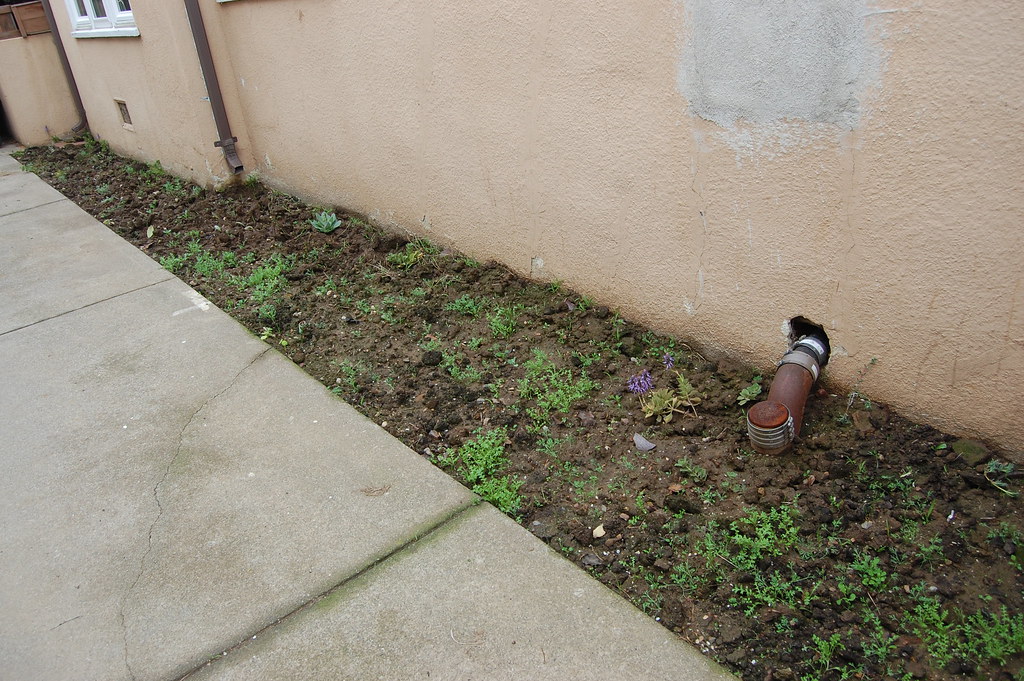
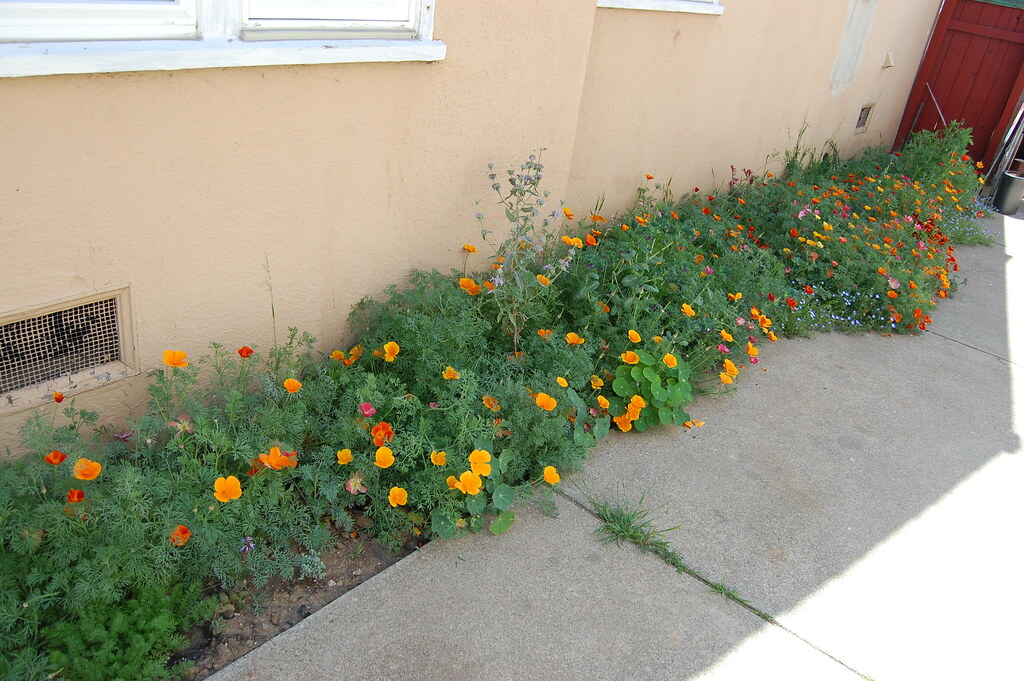
This is the story of how we turned our weedy strip next to the driveway we called “Poop Alley” in to a flowery fun place for super cheap when we lived in Oakland in 2014. It’s almost the time of year to start tossing around the California native annual seeds for the rains to get them going. We could have started our Oakland project a couple months earlier.
In the beginning: March 3rd, 2014
Sometime back in February Matti pulled out all the huge weeds growing next to our driveway (we don’t use this part to park) and gave the ground a good hoeing. That’s when my seed insanity began. I planted a jumbo bag of Baby Blue Eyes, a bunch of CA poppies, Nasturtiums, Clarkia, Cerinthe, Nigella and a Papaver I’m thinking is rhoeas. I also stuffed some random succulents in.
Starting to fill in: April 6th, 2014
In a short time things started to fill in and I shoved in some more free plants we got at a local plant exchange.
Baby Blue Eyes in action: April 28th, 2014
Fast forward a few weeks and the Baby Blue Eyes (Nemophila menziesii) started to rock. I wish I would have seeded some Tidy Tips (Layia platyglossa).
May 12th, 2014
It’s still kicking with almost no water. I throw a little on it once a week. The best part is that pretty much everything I seeded will reseed again next year to do it all again. I’m still waiting on the Nigella and Clarkia flowers to happen. They might have been eaten by the poppies. We knew our landlord would be returning to our house to retire when we moved in, so I looked for quick super cheap ways to make the garden spaces better.
May 12th, 2014
The view from my office. I work out of our garage and get to watch my flowers through the front doors every day. You can see the spot where Max actually poops down by the garbage cans. He pees on a little crack on the other side of the driveway. He’s been living with us long enough to know where to go potty with out making me mad.
LOVE this super little flowered red dude!
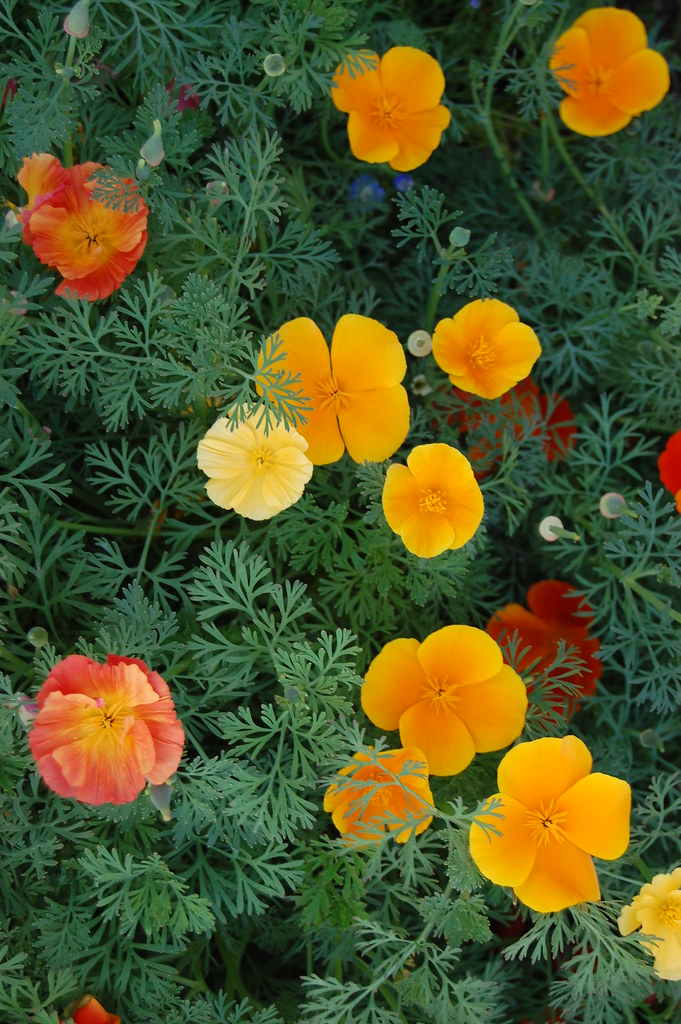
I planted Renee’s Copper Pot and Tropical Sunset Mix of California poppies (Eschscholzia californica) for a little bit of everything, but I’m a sucker for deep orange flowers.
This post is from August 2013 before Rob and his crew moved to Oregon (they brought their pitcher plants). Be sure to follow Rob and Dahlia on Instagram for all their super cool current plant pics.
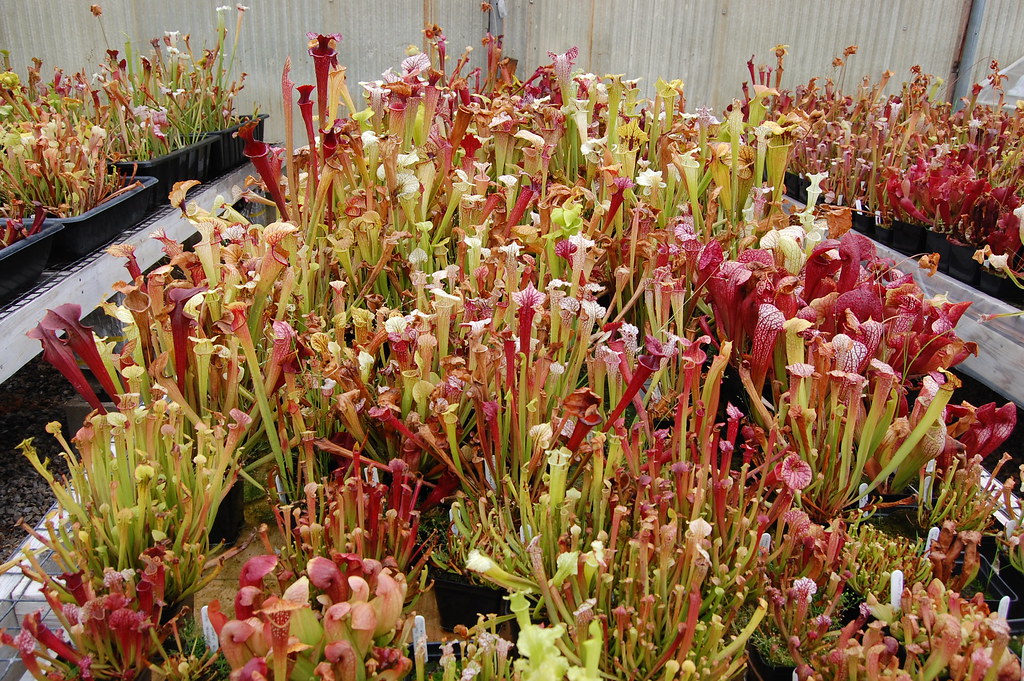
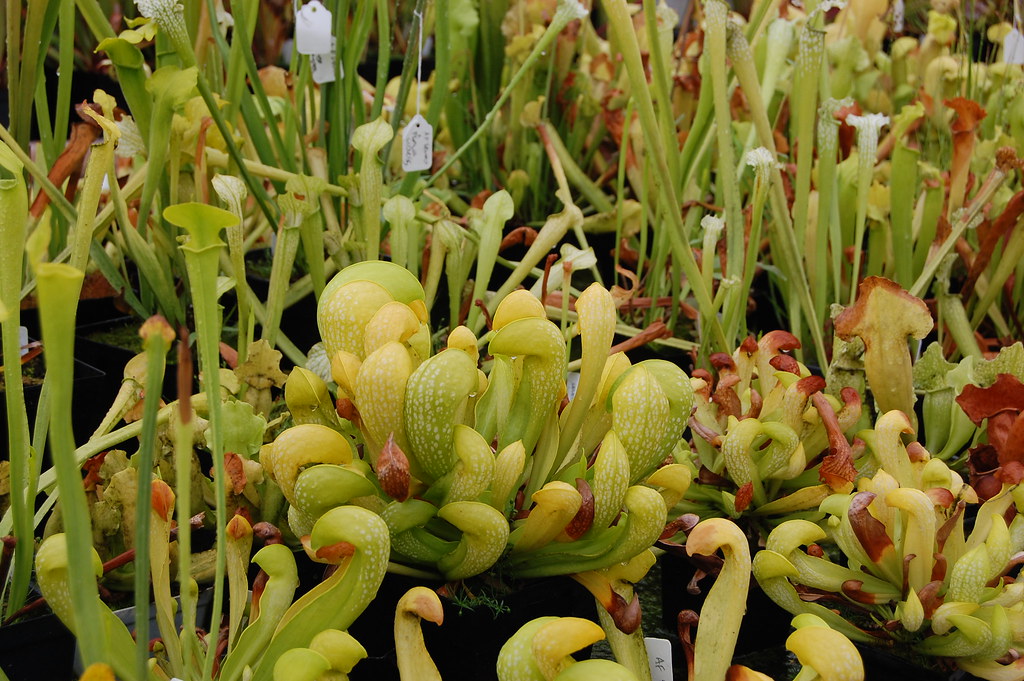
A couple weeks ago I had the good fortune to visit our plant nerd friend Rob from The Pitcher Plant Project and his amazing greenhouse space in Half Moon Bay, CA. We first met Rob three years ago when he offered us a free Gunnera. While Rob thinks this is kind of a crappy time of the year appearance wise for his huge Sarracenia collection, I have to disagree. Check out the pics below from our visit. He even has a few succulents hiding.
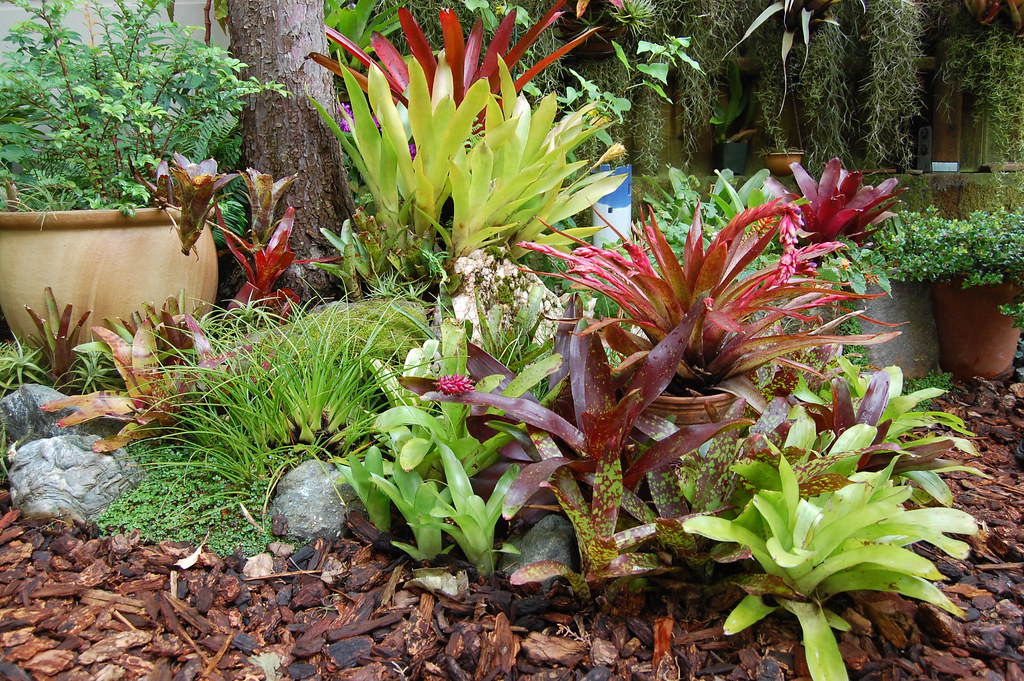
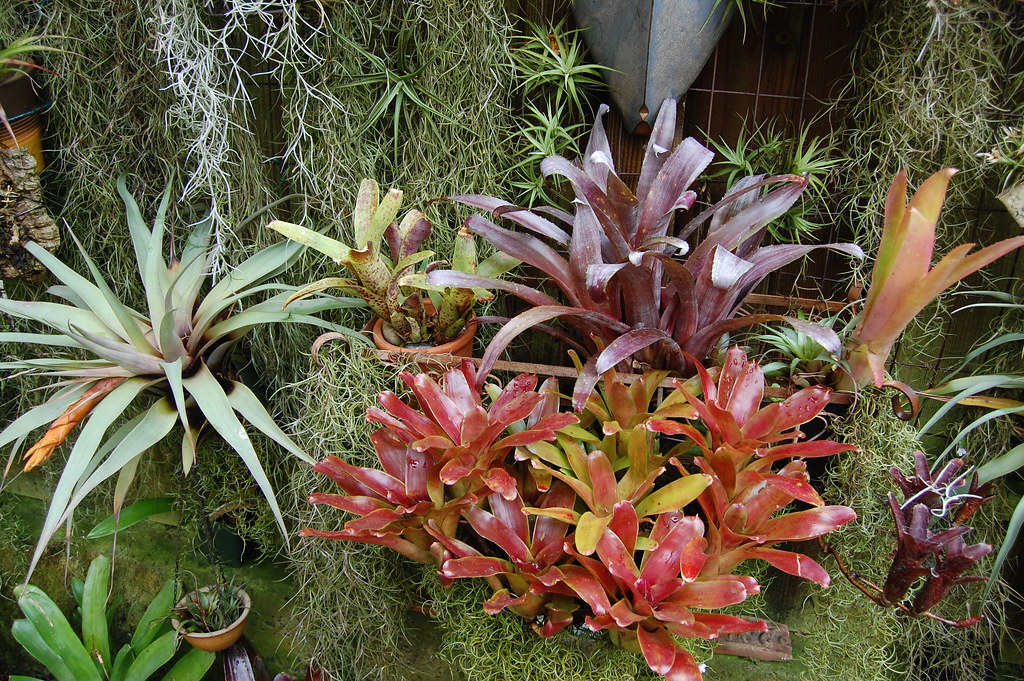
Originally posted July 2013. Last weekend we hit up the SF Bromeliad Society’s super rad garden tour AND busted out the good old DSLR for the first time in almost a year. Brian Ransom’s garden was my favorite of the bunch. The mix of bromeliads in all shapes and sizes along with California natives, succulents and orchids is so so good.
Love the little pops of hot pink on the orchid (maybe an epidendrum?). There’s so much fun stuff going on back here. We rented and gardened in SF, so I really appreciate how portable most of the plants in this space are. It’s hard to bring a five foot shrub with you, but plants in pots aren’t so bad.
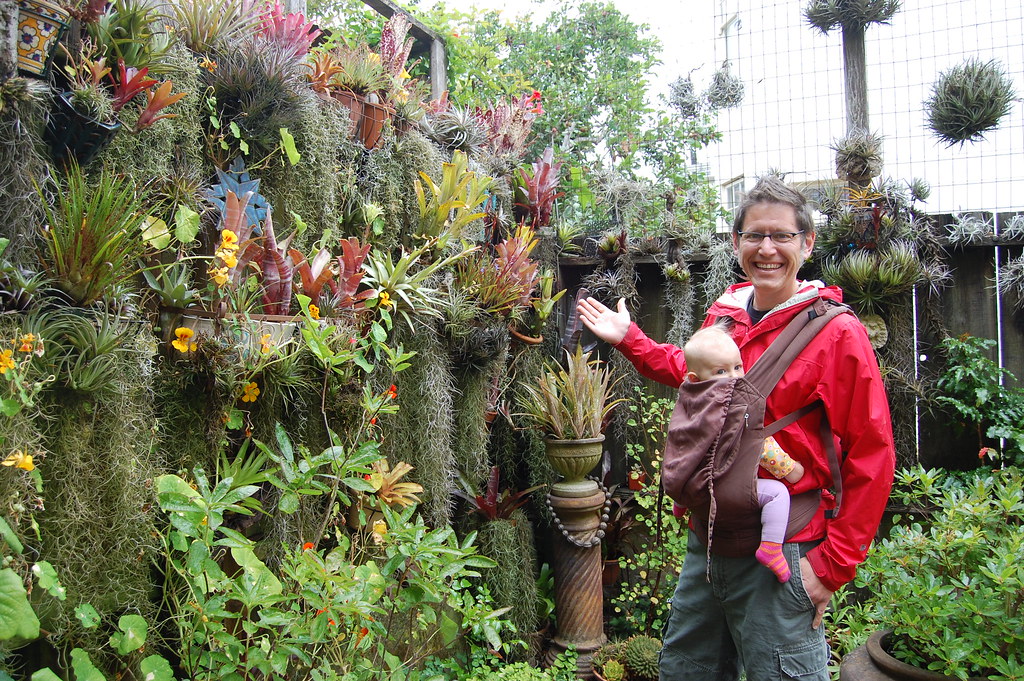
Gotta love this wild wall of bromeliads, which are perfect for vertical life as many are epiphytic (they live on other other plants and objects, not to be confused with parasitic).
One of my favorite blue California natives and bringer of bees Gilia capitata. Super easy to start from seed and grow in general. Love the Clarkias in the background, too. There is no California native wildflower I dislike.
Sweet succulents with a fun array of bromeliads.
Look at all those colors! We didn’t realize we could grow all these cool plants outside until we were seduced in to attended a SF Bromeliad Society meeting by SF Succulent Society folks (there’s a lot of crossover). Their website is a great resource of information if you want to do something like this in your own space.
Do I spy a hummingbird sage tucked in there?
Thunbergia blooms and Tillandsias chilling out next to each other. We’ve had way better luck keeping our Tillandsias (air plants) outside.
So many good things! I’ve always wondered about mosquito issues in bros, but didn’t think too much about it until I found tons of larvae in one of ours recently. I also keep fish, so I used a turkey baster, sucked some out and fed them to my fish (extreme integrated pest management). They loved it, so I went crazy sucking water out of all our bros to find more and couldn’t find any in our relatively decent sized collection.
Love the hanging baskets of Dudleya and Lewisia at Santa Barbara Botanic Garden. I want it hanging in my backyard. SBBG has one of the best collections of Dudleya around. I want them all.
I’ll shove a succulent in almost anything, whether it be a grill that nobody’s used for years, or an old wagon I picked up for five bucks at a garage sale. The possibilities are endless! First off, I want you to know that in many cases these are not permanent plantings (this is especially true for terrariums). Several months or even years down the road, depending on how quickly the succulents you plant grow, it’s extremely likely that your creations will benefit from a little fluff. I redo the wagon & the grill once or twice a year. Think of your succulents like sculptural elements & have fun. It’s not like you’re deciding where to plant a tree that you’ll have to live with for many a year.
Succulent Roos
The ultimate key to succulent happiness in the great outdoors (sorry folks in freezing locations) is drainage. Non-draining containers + rain = rotty mush. Pick up a ceramic bit & you can drill through almost anything so that the water can flow. These kangaroos came from Goodwill & after a quick meeting with the drill they drain perfectly. When it comes to drilling holes, higher quality ceramic items tend to be more challenging to drill through & glass is the trickiest, but it’s all possible if you’re willing to take the risk of a stray break here & there. Load up on inexpensive containers at your local thrift store. I’m a big proponent of succulent potting mix to achieve ultimate drainage. To create the roos above all I did was drill holes in their booties, fill with cacti/succulent mix & stick cuttings. Easy, peasy. These cuties would work inside in a bright location, too!
Graptopetalum paraguayense paradise
One of my all time favorite succulents for containers are the creamy pinkish blue rosettes of Graptopetalum paraguayense. Gardening in almost pure sand, two blocks from Ocean Beach in nearly frost free San Francisco means lots & lots of succulents are happy campers in my backyard. It’s succulent heaven, but before moving to California I actually grew a wide array of succulents in my living room closet with lights. Taking cuttings is easy. Just snip, snip & you’re done. If you’re a rule follower, snip your cuttings at least a day in advance so the cuts have time to dry out & heal over, preventing bacteria, etc … I normally don’t do this due to patience issues & things seem to turn out fine.
Oscularia deltoides & Satureja douglasii
Another one of my favorite succulents for cutting is Oscularia deltoides. It seems to benefit from a little haircut now & then anyways. Here it is escaping the border with a San Francisco native that smells like heaven, Satureja douglasii (Clinopodium douglasii).
Aeonium simsii
Aeoniums seem to put up with indoor action fairly well & Aeonium simsii is one of the highest rated of the bunch for indoor happiness. Love the eyelashes on the leaf margins.
Succulent Assortment
Over the past few years of putting together succulent containers & terrariums, I’ve found that often times less is more. I used to shove ten different succulents in an itty bitty container & let them battle it out. The results were often scraggy & sad. I tend to go for lower growers that form a dense mat, or splashy bigger rosettes.
Vintage Succulent Containers
A couple holes in the bottoms, some dirt, plants & they’re ready to go! Since these were taken as cuttings they have no roots, which means they have nothing to take up water with. Don’t fret, the water stored in the leaves will hold them over until they pop out new roots from the stems jammed in dirt. No fancy rooting hormones needed! I don’t even water containers composed of cutting based succulents for the first two weeks or so, to let them root out a bit. A sunny to part sunny spot is all they need. Indoors, they like a bright window.
Graptopetalum paraguayense Dino-land
Terrariums are all the rage these days, but I’ll tell you upfront – they’re a little trickier to keep happy. The key to keeping a container with no drainage is water control. Over watering is a sure fire way to rot the roots out & keep a fungus gnat family happy, but if you’re using glass it’s pretty easy to keep an eye on how much moisture is making it to the bottom of the container. I like to use a spray bottle. I’ll spray a bunch then wait a couple minutes to see how deep the water seeps in and spray more if needed.
Ornament Fun
Many hardcore succulent folks think it’s cruel & unusual punishment to put plants that like free draining soil & low humidity in glass, but I’ve had numerous successes with succulents in non-draining situations. They’re very forgiving. Planting wise, it’s easy. I like to use pretty rocks or gravel on the bottom for a wee bit of drainage space, plus it looks cool. Some folks add a sprinkle of horticultural charcoal in for good measure before adding the succulent potting mix in. I don’t. The next step is getting the plants in there. I like using rocks as a topdressing not only because they’re pretty, but they help keep the plants where you want them. If your container is small, it’s handy to have a pair of chopsticks for nudging stuff around.
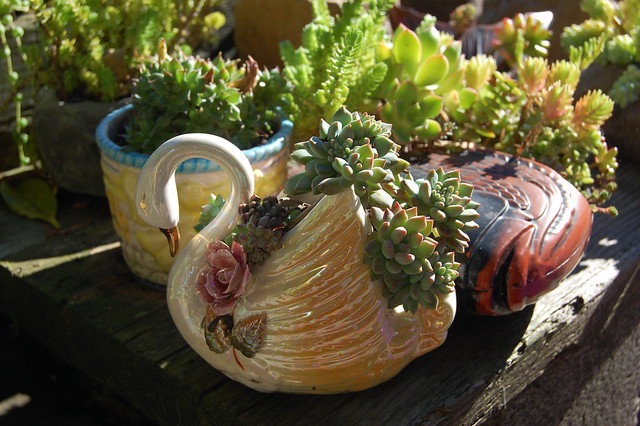
Succulent Swan
One last cute little Echeveria amoena in a vintage swan.
Last Friday before I headed to the San Francisco Botanical Garden I had to pay a bill, so I took a different route to the muni stop than normal to hit up a mailbox. I busted out my camera when I saw this awesome example of a succulent planter. Lots of different colors and textures, plants that are practically impossible to kill in our neighborhood and common enough people won’t steal them (succulent theft is a problem here).
Super Sweet Succulent Container
Then I saw this in front of the next house and kind of freaked out. Seriously? Agave attenuata ‘Kara’s Stripes’ and a bunch of other cool plants thoughtfully arranged in containers. There are tons of succulents in our hood, but not usually put together with this much care.
The Container Craziness Continues
Wholly crap, it doesn’t end! Graptoveria ‘Fred Ives’ looking hot next to a golden Sedum with a dark purple Aeonium backdrop. Then something crazy happened. The owner of the house was out front saying good-bye to visitors, saw me freaking out taking tons of pictures and invited me out back to check things out.
Look at the beautiful raised bed down the center full of edible greens! This is how I envisioned our garden in a perfect world, but we drew the line at messing with hardscaping. As renters you have to draw the line somewhere.
Kalanchoe beharensis ‘Fang’Dudleya pulverulenta (I think)
Man, this is embarrassing. You’d think I could easily pick out the difference between D. pulverulenta and D. brittonii by now, but I can never tell unless the two are both next to each other. My guess is for D. pulverulenta since the leaves don’t seem as narrow as the brittonii.
Lettuce landEchium candicans
Big thanks goes out to Alan who let me check this fabulous garden out. I didn’t get to meet his wife/garden designer, but she did an amazing job!
Three years ago I tracked down an Aristolochia californica from Bay Natives at the SF Garden Show. I had dreams of Pipevine Swallowtail caterpillars chomping on it, but so far they haven’t found it. I’ve heard it can take years… unless you get an awesome flickr message offering up babies in exchange for some food cuttings. On Friday we became proud parents of a hungry little group of caterpillars thanks to butterfly guru Timtastic (the link will take you to his sweet pics on flickr).
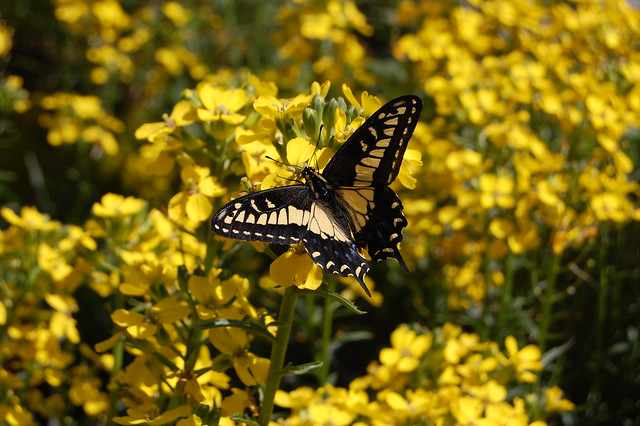
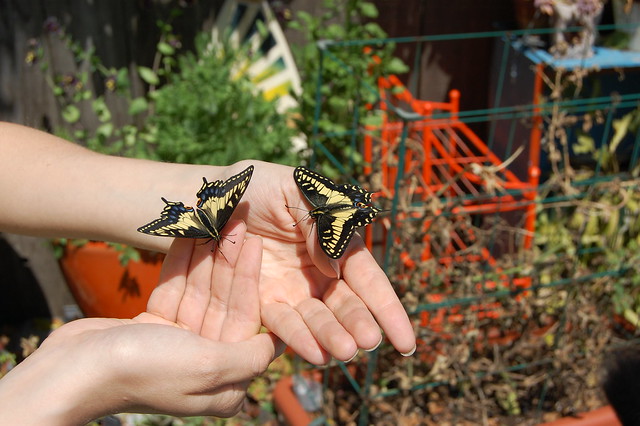
Anise swallowtail butterflies
Since we won’t be able to see our babies turn in to butterflies, Tim brought over a pair of Anise swallowtails to release out back. I got to hold them while they warmed up and took flight.
Anise swallowtail & Erysimum franciscanum var. crassifolium
For the rest of the day they hung out on our ginormous (we’re talking nearly five feet wide) San Francisco Wallflower, (Erysimum franciscanum var. crassifolium). As we rip apart the garden it’s a sunny site in the middle of the yard, that I know isn’t going anywhere. We’re leaving all the California natives except for the Dudleyas and Lewisias.
Collecting Aristolochia californica
Our Aristolochia californica is huge and happy! This is one of my favorite plants we have, so being able to raise caterpillars that will use it is like a dream come true. That’s why I planted it. By the time we move, they’ll be big enough to release on the vine.
Caterpillar hotel
This is where the babies are living right now. They eat together in a big mass. So far they’ve gone through almost two leaves. I look at them at least once every three hours. They’re a great distraction to the stresses of packing and getting ready to move cross country in three weeks. I even made a butterfly garden pinterest board for Wisconsin. I admit it, I’m a pinterest addict. Where else would a find a recipe to make very realistic jello worms, or collect all my raised bed planter ideas in a pretty fashion? I’m starting all kinds of lists for plants I want to grow when we’re back in WI, too.
One last pretty pic
The Anise swallowtail hung out of the Phylica pubescens for a little bit. Thanks again to Tim for hooking us up!
Our love of driftwood was solidified when we lived in Outer Sunset next to the beach. Post from March 2012. We haven’t checked in lately, so we’re not sure if it’s still there.
Whoever created this work of garden awesomeness rocks! It’s on 44th avenue around Pacheco maybe (I can’t remember, but I’m pretty sure it’s south of Noriega).
Succulent driftwood container of happiness
Succulents on the street
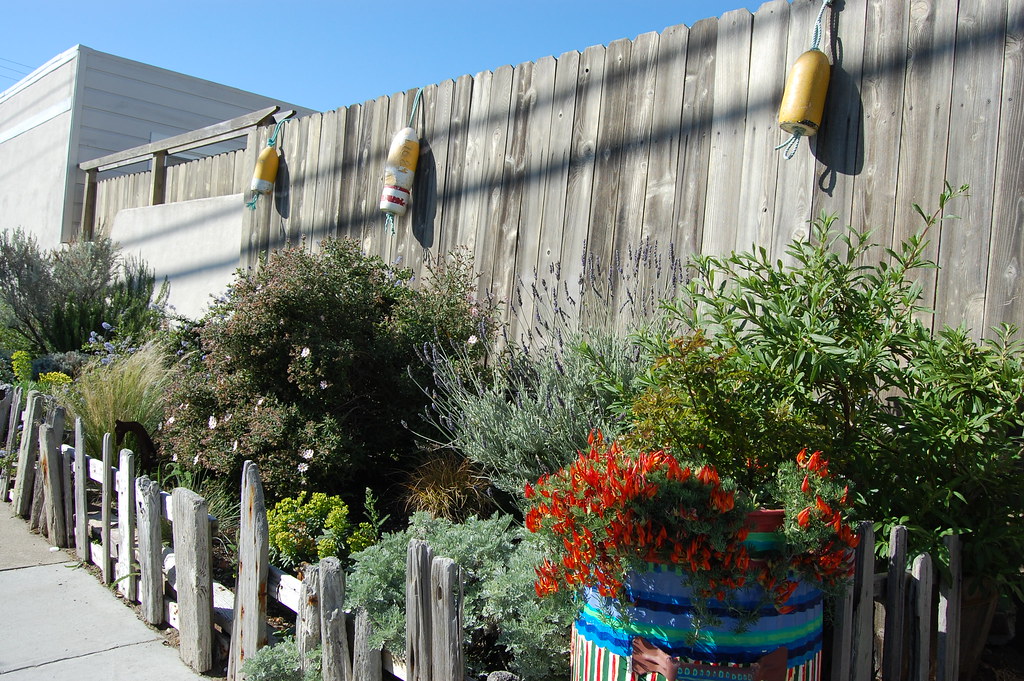
Ceanothus and super sweet fence
The fence was still a work in progress last time we visited, but we knew it was going to turn out amazing. Looks like they used bits of reclaimed wood mixed in with driftwood. Hurray for Ceanothus bloom time!
Sexy Salvia africana-lutea
One of my favorite Salvias. It’s gotta be the orangey-rust blooms. Now I know I planted ours in a ridiculous spot seeing how big they get. Ooops. I seem to have a problem with size denial… “It won’t really get THAT big”.
More happy borderDriftwoody container
It’s been awhile since we’ve visited our old part of town. We’ll investigate if this garden still around.
Update: Sadly Ted passed away November 24th, 2019. Here’s a great tribute by Bart O’Brien, President of California Horticultural Society.
You know the term, a man’s man? Well if there’s such thing as a gardener’s garden…this is the place. What a treat it was to visit Ted Kipping’s private oasis over in the Glen Park neighborhood. When Ted isn’t traveling to exotic locations seeking out rare plants in habitat or working his business at Tree Shapers, he’s constantly tweeking his garden.
Scleranthus biflorus
Ted has several hypertufaesque containers tucked in throughout his space. After I stopped drooling over that first pic of the Dudleya attenuata, I saw his Scleranthus biflorus, which was looking lusher than ours.
Lewisia cotyledon
I had a bunch of those…wow, why didn’t I think of that moments. Here’s a plant we have in our garden, but his Lewisia cotyledon looked way more cooler than ours. He does some amazing mini landscapes, and certainly influenced us to make our alpine container about a month back.
Dierama bee love
Megan tells me that Dierama are hot right now. The bee and me would have to agree. Sometimes called Fairy’s Fishing Rods, they fall in the same family as Crocosmiaand put on quite a show.
Begonia foliosa var. miniataAgave parryi
Agave parryi, always a fave. Slow growing, its gray spiky foliage spans to about a 30-inch diameter. Stunning accent plant, indeed.
Bromeliad fence
His Bro Fence was sweet. Ted shared with us a little trick. He uses a variety of Bromeliads to fill in holes and gaps within his garden until he finds just the right plant for that space. Since many Bros are easy to transplant and move around…they work well for his technique. Small potted plants work the same way. Brilliant.
Brugmansia & Blue Sky
Gratuitous Brugmansia and blue sky shot. It was one of those gorgeous fall days.
Plectranthus awesomus
Score! Ted dropped us a couple cuttings including a pinch of this shady loving limey Plectranthus. It’s gonna look great on our shady side. You rock Ted!




























 Far Out Flora